

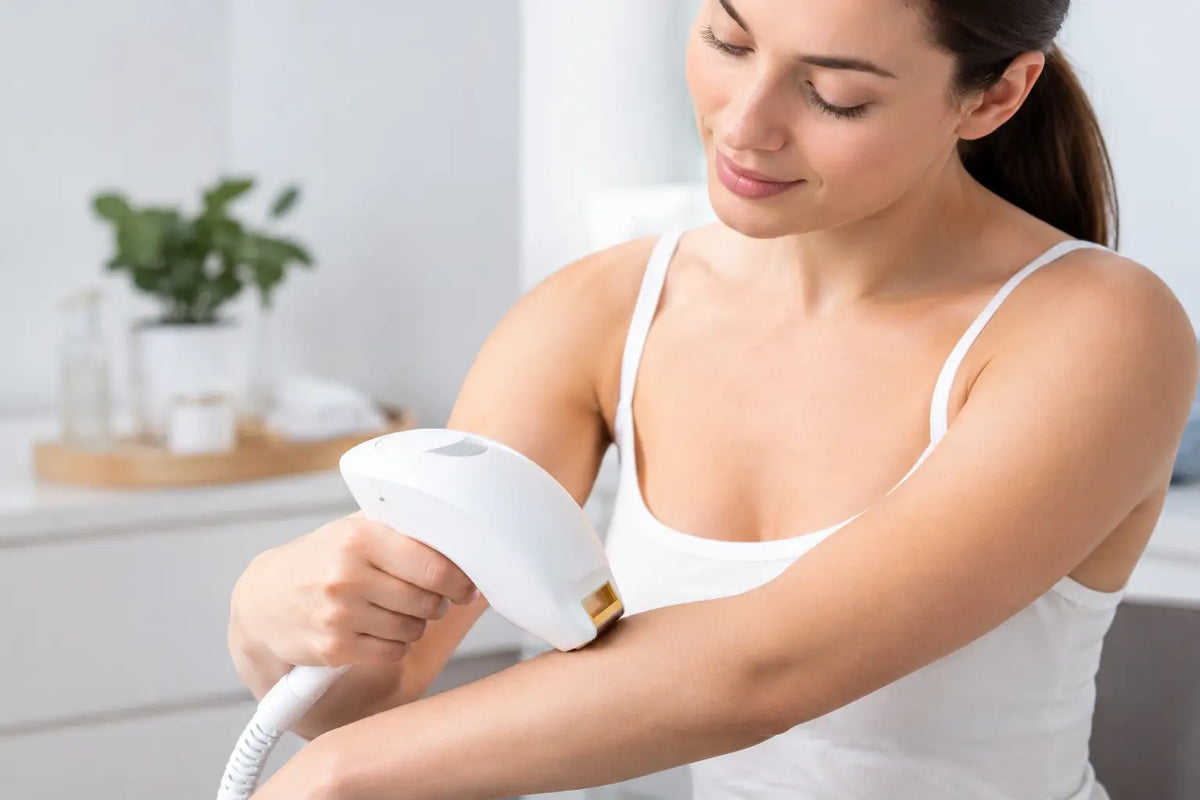
Smooth, low-maintenance skin should not come with guesswork. Learning how to patch test IPL gives your skin a chance to show how it responds before you treat a larger area. It takes only a few minutes, helps you choose a comfortable energy level, and lets you begin your at-home routine with more confidence.
A patch test is not the glamorous part of IPL hair removal, but it is the smart part. Think of it as your personalized starting point for getting the results you want while treating your skin with care.
What Is an IPL Patch Test?
IPL stands for intense pulsed light. At-home IPL devices use flashes of light that target pigment in the hair, helping disrupt the hair-growth cycle over repeated treatments. Because every person’s skin, hair color, and sensitivity level are different, a patch test checks how your skin handles that light before a full session.
For most people, the process is simple: shave a small, discreet spot, use one flash at a low setting, then monitor the area for 24 hours. If your skin stays calm, you can move forward carefully. If it becomes very irritated or reacts in an unusual way, pause treatment.
This small step is especially worth doing when you are new to IPL, treating a new body area, returning after a tan, or increasing your device’s intensity setting.
How to Patch Test IPL at Home
Always follow the instructions that came with your specific device first. Device features and recommended settings can vary. That said, the basic process below is a reliable, easy-to-follow approach for most at-home IPL routines.
1. Choose a small, hidden treatment spot
Pick an area you plan to treat regularly, such as a small section of the lower leg, underarm, or bikini line. Avoid starting on highly visible areas like your face. The patch-test area should be representative of the skin you want to treat, but small enough that any reaction is easy to monitor.
If you want to use IPL on more than one region, test each area separately. Underarm skin, for example, may respond differently than your legs. The bikini line can also be more sensitive than other areas.
2. Shave and clean the skin
Shave the test area closely. IPL works best when the hair is removed from the surface but the follicle remains beneath the skin. Do not wax, tweeze, or epilate before your test, since those methods remove the root IPL is designed to target.
Wash away deodorant, lotion, body oil, perfume, makeup, and self-tanner. Your skin should be clean and completely dry before you begin. This prevents product residue from interfering with the light or causing unnecessary irritation.
3. Start at the lowest recommended setting
If your device offers adjustable intensity levels, begin with the lowest setting recommended for your skin tone. Place the treatment window flat against the skin, making full contact, then deliver one flash.
Some devices include skin-sensing technology or a skin-tone guide. Use those features as directed, but do not treat them as a substitute for a patch test. Your own comfort and visible skin response matter too.
The sensation may feel like a quick snap of warmth. It should not feel sharply painful. Stop right away if you experience significant burning, intense discomfort, or an immediate reaction that concerns you.
4. Wait a full 24 hours
After one flash, leave the area alone and watch it over the next day. Avoid heat-heavy activities such as hot baths, saunas, intense workouts, or direct sun exposure on the tested skin. Keep the area clean, and use a gentle, fragrance-free moisturizer if it feels dry.
A little temporary warmth or mild redness can happen, particularly in sensitive areas. What you do not want to see is persistent redness, swelling, blistering, crusting, pronounced itching, or changes in skin color. If any of these occur, do not continue treating the area. Speak with a healthcare professional or dermatologist before trying IPL again.
5. Increase gradually, never all at once
If your skin looks and feels normal after 24 hours, you can begin your first full treatment using that same setting. Do not jump straight to the highest intensity because you want faster results. More intensity is not automatically better for every skin tone or body area.
After successful treatments with no irritation, you may be able to increase the setting gradually according to your device instructions. The goal is a setting that feels effective and comfortable, not a session you have to push through.
What a Normal IPL Patch Test Feels Like
The best outcome is simple: you notice little to nothing after the test. During the flash, many users feel brief warmth, a light prickling sensation, or a quick rubber-band-like snap. The feeling should fade fast.
Some people see slight redness around the hair follicles right after treatment. This can be a normal short-term response, especially when hair is darker or coarser. It should settle rather than intensify.
Your skin should not remain painful, feel hot for hours, blister, or become noticeably swollen. IPL is designed to fit into your self-care routine, not derail it.
When You Should Skip an IPL Patch Test
A patch test tells you how your skin responds to the device, but it does not make an unsuitable treatment area safe. Skip IPL treatment if the skin is sunburned, irritated, broken, infected, or freshly tanned. Wait until it has fully healed and returned to its normal color.
You should also avoid flashing over tattoos, dark moles, very dark freckles, or areas with permanent makeup. Cover them completely and treat around them if your device instructions allow it. IPL is drawn to pigment, so these spots can absorb more light than intended.
Check with a qualified healthcare professional before using IPL if you are pregnant or breastfeeding, have a photosensitivity condition, use medication that increases light sensitivity, or have a history of skin reactions to light. The same goes for anyone managing a skin condition in the area they want to treat.
At-home IPL may not be suitable for every skin tone and hair color combination. It tends to work best when there is visible contrast between the hair and skin because the light needs pigment in the hair to target. Read your device’s skin-tone and hair-color suitability guidance before testing.
Patch Testing Different Body Areas
Do not assume a successful leg patch test means every area is ready for the same setting. The skin on your underarms and bikini line may be more reactive, while the upper lip can be particularly sensitive. Test these areas individually before treating them.
For facial IPL, follow your device’s directions closely. Keep flashes away from the eyes, eyebrows, and eyelids, even if the device is marketed for facial use. Never use an IPL device near the eye area unless the manufacturer specifically says it is safe and explains exactly how.
For your bikini line, treat only the external area your device identifies as suitable. Avoid mucosal or genital areas. A careful patch test is particularly valuable here because the skin can be more delicate and pigmented.
Simple Aftercare for Your Test Spot
Treat your test spot gently for the next 24 hours. Keep it out of direct sunlight and use broad-spectrum sunscreen on exposed skin. Avoid exfoliating acids, retinoids, scrubs, fragranced products, and strong deodorants directly on the area until you know your skin is calm.
Resist the urge to repeat the flash in the same place to “make sure.” One test flash is enough. Repeated passes can add unnecessary heat and make it harder to tell how your skin truly responds.
If your patch test is successful, you are ready for the exciting part: building a consistent IPL routine. Whether you choose a device like the NOHA Device or another at-home option, steady sessions and patient progress matter more than turning the setting up too fast.
Your patch test is a small act of self-care with a big payoff. Give your skin that 24-hour check, then move forward at a pace that feels good - one confident flash at a time.

Deja un comentario
Este sitio está protegido por hCaptcha y se aplican la Política de privacidad de hCaptcha y los Términos del servicio.