

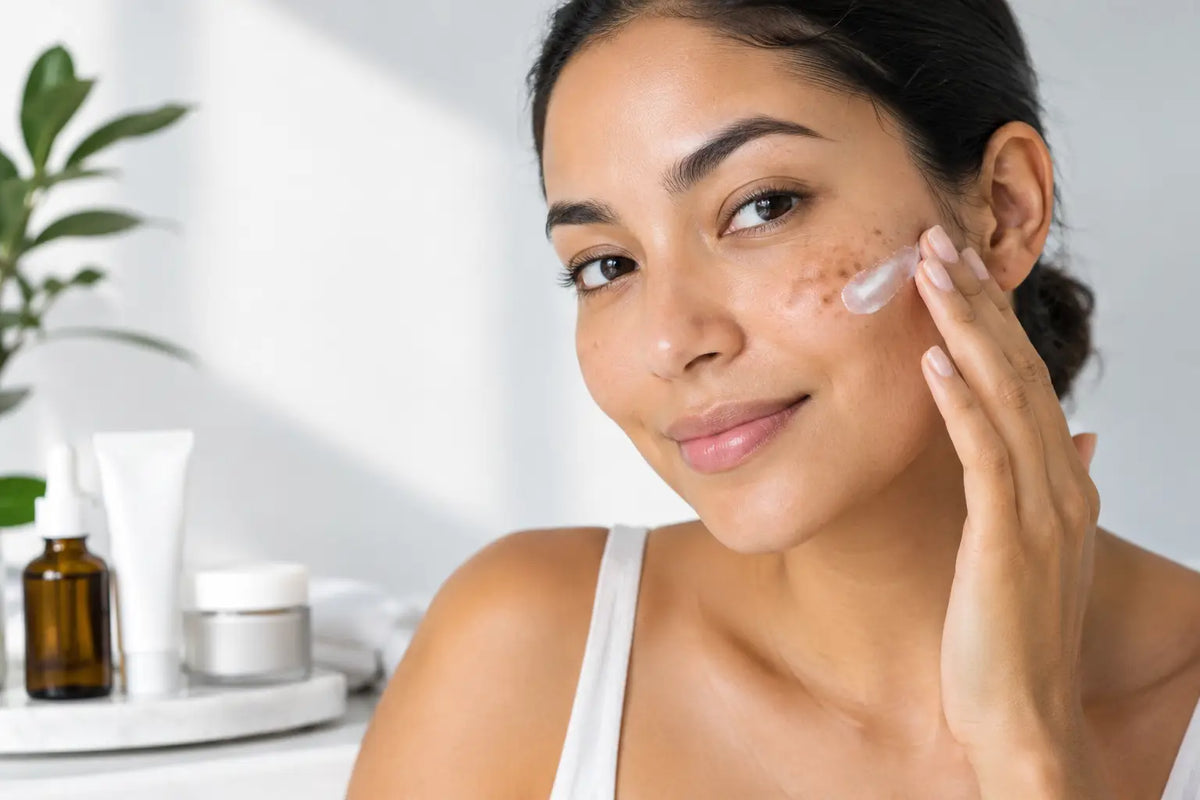
A dark spot skincare guide should start with one truth: fading discoloration is less about finding one miracle product and more about stopping the daily triggers that keep spots visible. If you are treating old acne marks, sun spots, or dark areas left behind after irritation, your routine needs consistency, patience, and sunscreen every single day.
Dark spots can make skin look uneven long after the original breakout, ingrown hair, or blemish is gone. The good news is that a smart at-home routine can help improve the look of discoloration without making your skin feel stripped, overwhelmed, or sensitive.
What Dark Spots Actually Are
Most dark spots are caused by extra melanin, the pigment that gives skin its color. When skin experiences inflammation or UV exposure, it may produce more pigment as part of its response. That extra pigment can linger as a brown, gray-brown, or deeper-toned mark.
Post-inflammatory hyperpigmentation is especially common after acne, bug bites, razor bumps, ingrown hairs, or picking at the skin. Sun spots tend to develop gradually after repeated UV exposure. Melasma is different: it often appears in symmetrical patches on the cheeks, forehead, upper lip, or jaw and can be influenced by sun, heat, hormones, and genetics.
The cause matters because it changes what your skin needs. A single dark mark after a pimple may respond well to a simple brightening routine. Melasma or fast-changing patches deserve a conversation with a dermatologist rather than aggressive at-home experimentation.
The Non-Negotiable Step: Daily Sunscreen
No brightening serum can outwork regular sun exposure. UV light can deepen existing spots, create new discoloration, and slow the visible progress you are working for. Even on cloudy days, near windows, or during a quick drive, exposure adds up.
Use a broad-spectrum SPF 30 or higher each morning, including on days you stay indoors. Apply enough to cover your face and neck evenly, then reapply when you are outdoors, sweating, or spending long stretches near strong daylight. For deeper skin tones, tinted formulas with iron oxides can be especially helpful for visible-light exposure, which may worsen certain forms of hyperpigmentation.
This is not the glamorous step, but it is the one that protects your results. Think of sunscreen as the support system for every dark spot treatment in your routine.
A Dark Spot Skincare Guide to Active Ingredients
You do not need six strong actives at once. In fact, layering too many exfoliants and treatments can cause irritation, and irritation can create more discoloration. Choose one or two targeted ingredients, introduce them slowly, and let your skin adjust.
Vitamin C for daytime brightness
Vitamin C is an antioxidant that can help defend against environmental stress while supporting a brighter, more even-looking complexion. It is a natural fit for a morning routine, followed by moisturizer and sunscreen.
If your skin is sensitive, look for a gentler vitamin C derivative or use it every other morning first. A little tingling can happen with some formulas, but burning, persistent redness, or peeling is a sign to stop and simplify.
Niacinamide for a calmer routine
Niacinamide is a versatile option for people who want brightening support without a harsh feel. It can help support the skin barrier, balance the appearance of uneven tone, and work well alongside many other ingredients.
It is a strong choice if dark spots are paired with dryness, redness, or breakouts. Use it once or twice daily after cleansing, depending on the product and how your skin feels.
Azelaic acid for marks and breakouts
Azelaic acid is a favorite for skin that deals with acne, redness, and lingering post-breakout marks. It helps improve the appearance of uneven tone while being generally gentler than a heavy exfoliation routine.
Start a few nights per week, then increase if your skin stays comfortable. It can be particularly useful for discoloration related to acne and ingrown hairs, but results still take time.
Retinoids for long-term renewal
Retinoids encourage skin cell turnover and can help improve the appearance of dark spots, texture, and acne over time. They are powerful, but more is not better. Start with a low-strength over-the-counter retinol or retinal product two nights weekly, using a moisturizer before or after if needed.
Avoid using retinoids on the same night as a strong exfoliating acid when you are new to both. Pregnant or breastfeeding individuals should ask their healthcare professional before using retinoids.
Exfoliating acids for dull, congested skin
AHAs, such as glycolic or lactic acid, can help fade surface-level discoloration by encouraging the shedding of older skin cells. BHAs, such as salicylic acid, are helpful when clogged pores and ingrown hairs are part of the picture.
The trade-off is sensitivity. Over-exfoliation can leave skin stinging, flaky, and more prone to post-inflammatory hyperpigmentation. Limit exfoliating acids to one to three times weekly unless a dermatologist directs otherwise.
Build a Routine Your Skin Can Stick With
A complicated routine is not automatically a better routine. Your goal is clear: protect your skin in the morning, treat it gently at night, and avoid creating new inflammation.
In the morning, cleanse if needed, apply vitamin C or niacinamide, use moisturizer, and finish with broad-spectrum sunscreen. At night, cleanse away makeup, sweat, and sunscreen, then use one treatment product such as azelaic acid or a retinoid. Follow with a simple moisturizer.
If you want to use an exfoliating acid, make it your only active treatment that evening. Skip the retinoid and keep the rest of your routine soothing. This approach may feel slower than using everything at once, but it is far more likely to keep your barrier happy and your progress moving forward.
Stop the Habits That Keep Marks Around
Dark spot care is also about removing the triggers. Picking pimples, squeezing ingrown hairs, using rough scrubs, and shaving over irritated skin can all lead to new marks. The same goes for trying a powerful product too often because you want faster results.
For body discoloration caused by bumps or hair removal, reduce friction wherever possible. Use a clean, sharp razor if you shave, avoid dry shaving, and give irritated skin time to calm down before exfoliating. If repetitive shaving leaves you with frequent bumps and dark marks, choosing a lower-friction hair removal routine may help reduce one source of ongoing irritation.
Be cautious with DIY remedies. Lemon juice, baking soda, toothpaste, and harsh alcohol-based products can irritate skin and worsen discoloration. If a treatment burns, it is not proof that it is working.
How Long Does It Take to Fade Dark Spots?
Most dark spots do not disappear overnight. With consistent sunscreen and a gentle targeted routine, you may begin to see visible improvement in eight to twelve weeks. Deeper or older marks can take several months, especially if your skin is frequently exposed to sun or irritation.
Track progress with photos taken in the same lighting once a month instead of checking the mirror every day. Daily checking makes gradual improvement harder to notice and can tempt you to switch products before they have had a real chance to work.
When to See a Professional
At-home care is useful for many common dark spots, but some situations call for expert guidance. See a dermatologist if a spot changes quickly in size, shape, or color; bleeds; itches persistently; or looks different from your other marks. Professional help is also worthwhile for stubborn melasma, severe acne scarring, or discoloration that has not improved after several months of consistent care.
Prescription treatments, chemical peels, and certain in-office procedures can be effective, but they are not automatically right for every skin tone or skin concern. The best option depends on your history of sensitivity, your type of discoloration, and how reliably you can protect your skin from the sun afterward.
Clearer-looking skin comes from small choices repeated often: leave the blemish alone, wear the sunscreen, use one treatment consistently, and give your skin the calm conditions it needs to show progress.


Deja un comentario
Este sitio está protegido por hCaptcha y se aplican la Política de privacidad de hCaptcha y los Términos del servicio.