

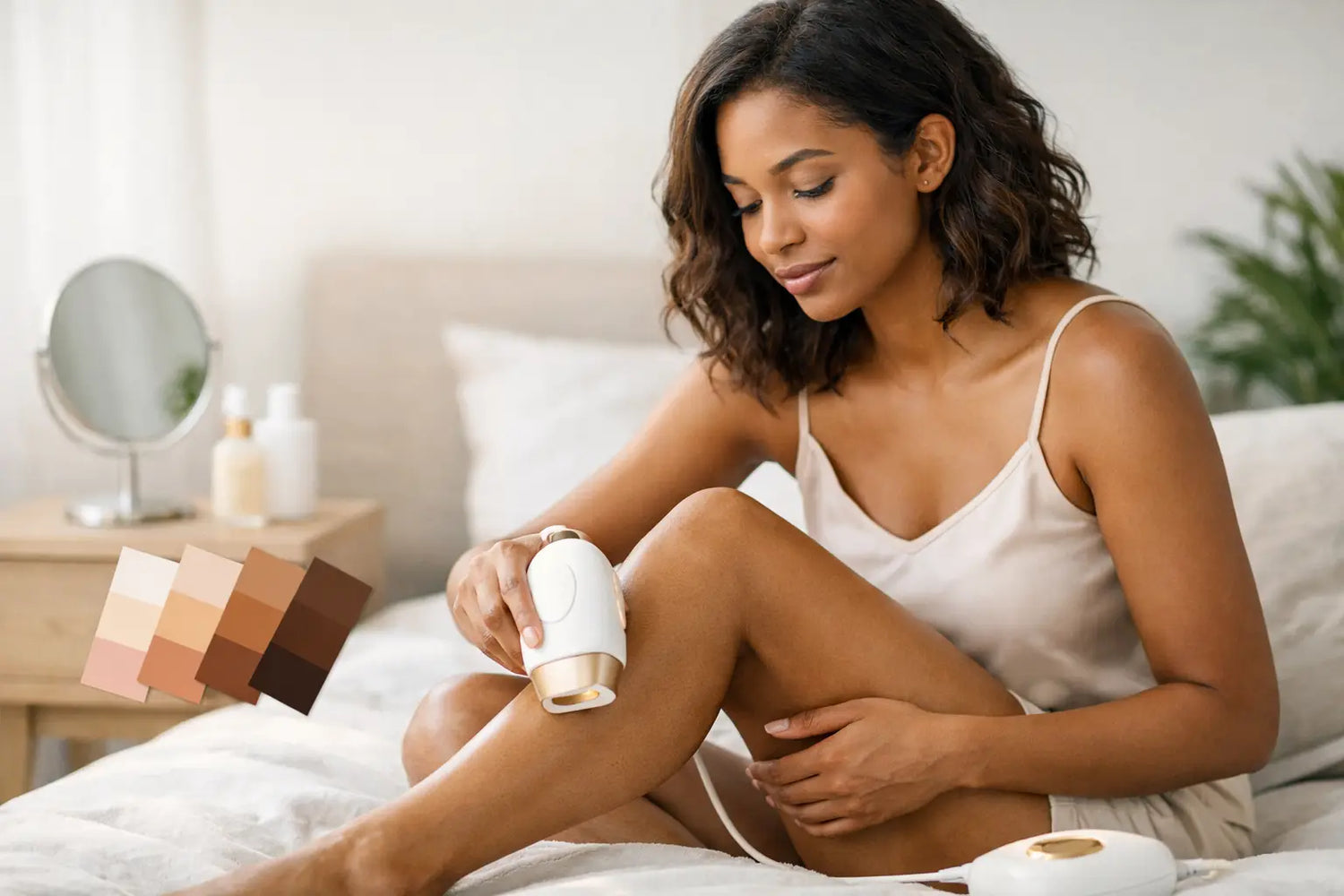
IPL can make your hair-removal routine feel dramatically simpler, but the best results start with a smart match between your device and your skin. This guide to skin tone IPL safety explains how to use intense pulsed light confidently, protect your skin, and know when a different hair-removal option is the better choice.
Why Skin Tone Matters With IPL
IPL works by sending broad-spectrum light into the hair follicle. The pigment in the hair, called melanin, absorbs that light and converts it to heat, helping disrupt the follicle’s regrowth cycle over repeated treatments.
Melanin is also what gives skin its color. When a device is used on a skin tone outside its approved range, more light may be absorbed by the skin instead of concentrating on the hair. That can raise the risk of excess heat, irritation, burns, blistering, or temporary changes in skin color.
This is not about whether one skin tone is better than another. It is about choosing technology designed for your unique skin-and-hair combination. At-home IPL is often most effective when there is visible contrast between lighter skin and darker hair. The less contrast there is, the harder it can be for a device to target the hair safely and effectively.
Start With the Device Compatibility Chart
The device manual and its skin tone chart should always be your first checkpoint. Reputable IPL devices specify the skin tones and hair colors they are designed to treat. Follow that guidance exactly, even if you have used another light-based device before.
Many brands use the Fitzpatrick skin type scale as a reference. This scale groups skin by how it responds to sun exposure, from very fair skin that burns easily to deeply pigmented skin that rarely burns. It can be useful, but it is not a perfect at-home diagnosis. Your natural skin tone, current tan, recent sun exposure, and the body area you are treating can all affect suitability.
A safe device match also depends on hair color. IPL generally does not work well on white, gray, red, or very light-blonde hair because these shades contain too little pigment to absorb enough light. Turning up the intensity will not solve that issue. It can simply increase discomfort and skin risk.
If your device has a built-in skin sensor, use it before every treatment area. A sensor is an added safety feature, not permission to ignore the instructions. If it does not flash, does not activate, or indicates that the area is unsuitable, stop there.
The Patch Test Is Your Best First Step
A patch test takes only a few minutes and gives your skin time to show you how it responds. It is especially helpful before your first IPL session, when changing intensity levels, after a vacation in the sun, or when treating a new body area.
Shave the small test area first. Clean and dry the skin, then use the lowest recommended setting for your skin tone. Treat one or two small spots and wait at least 24 hours. Some brands may recommend a longer waiting period, so follow your device instructions if they differ.
A little warmth or slight pinkness that fades quickly can happen. Stop treatment and do not continue if you notice prolonged redness, swelling, blistering, burning, significant tenderness, or darkening or lightening of the skin. If a reaction is painful, severe, or does not improve, contact a healthcare professional.
Patch testing is not a step to skip because you are in a hurry. Smooth skin is the goal, but healthy skin comes first.
Avoid Treating Tanned, Sunburned, or Irritated Skin
A tan changes the amount of pigment near the surface of your skin, even if it looks subtle. That extra pigment can absorb IPL energy and make a setting that was comfortable last month feel too intense today.
Do not use IPL on sunburned skin or skin that is visibly tanned from the sun, tanning beds, or self-tanner. Self-tanning products can interfere with the device’s ability to read your skin properly and may create uneven results. Wait until the tan has fully faded, then patch test again before restarting treatments.
You should also pause if the area has cuts, razor burn, eczema flare-ups, active irritation, open sores, or a rash. IPL is not a fix for inflamed skin. Give the area time to recover, then reassess.
For women living in sunny places, including Puerto Rico, sun care is a major part of IPL safety. Cover treated areas when possible and use broad-spectrum sunscreen as part of your everyday routine. Freshly treated skin does not need extra UV stress.
Prep the Area the Right Way
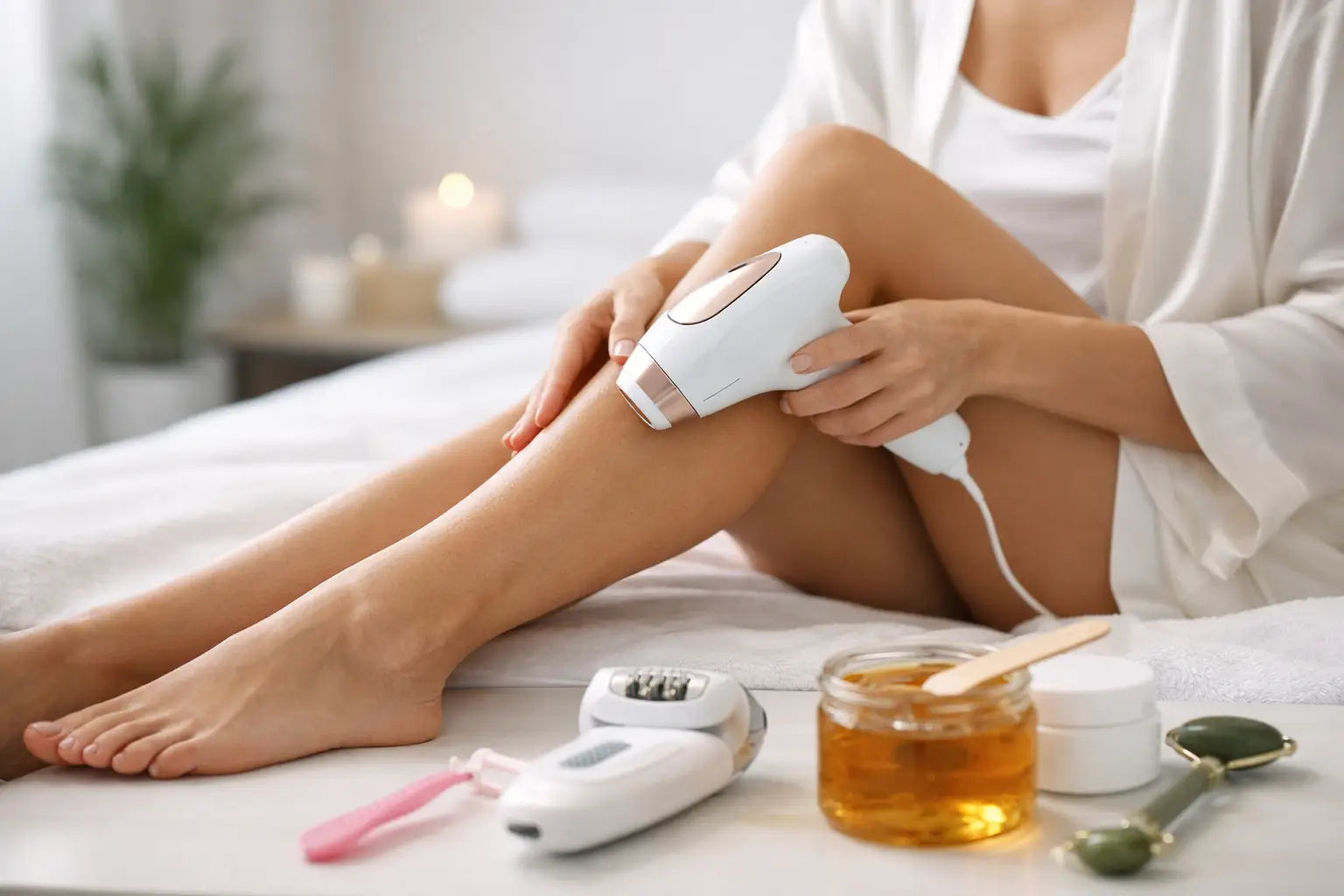
Good preparation keeps treatment straightforward and helps the light reach the follicle without unnecessary surface interference. Shave the treatment area closely before using IPL. Do not wax, tweeze, thread, or epilate beforehand because IPL needs the hair root in place to target the follicle.
Your skin should be clean and completely dry. Skip body oils, heavy lotions, deodorant on underarms, perfume, and shimmer products immediately before treatment. These can make the skin more sensitive or prevent the device window from sitting flush against the skin.
Do not flash over tattoos, permanent makeup, dark birthmarks, very dark freckles, or raised moles. These areas may absorb more energy than the surrounding skin. Cover them with an opaque white barrier if your device instructions permit it, or simply work around them.
Use the device at the intensity your skin can tolerate and your manual approves. Higher is not automatically better. Consistency at a safe level matters more than pushing through painful flashes.
Medications and Skincare Can Change Your IPL Plan
Some medications and topical products can make skin more sensitive to light. This can include certain acne treatments, retinoids, antibiotics, prescription skin treatments, and products that cause peeling or irritation. If you are using a new medication or active skincare ingredient, check with your doctor, dermatologist, or pharmacist before using IPL.
Do not treat over recently peeled, exfoliated, or freshly resurfaced skin. If you use retinol, acids, scrubs, or acne treatments on the area, give your skin a break according to your device guidance and your clinician’s advice. The goal is calm, intact skin - not skin that is already working hard to recover.
Pregnancy, breastfeeding, certain medical conditions, and a history of light sensitivity may also affect whether at-home IPL is appropriate. When in doubt, get personalized medical guidance before you begin.
What a Safe IPL Session Feels Like
Most people describe IPL as a brief warm snap, similar to a light rubber-band flick. It should not feel like intense burning. Treat one section at a time, keep the device window flat against the skin, and avoid repeatedly flashing the same spot in one session unless your manual specifically instructs otherwise.
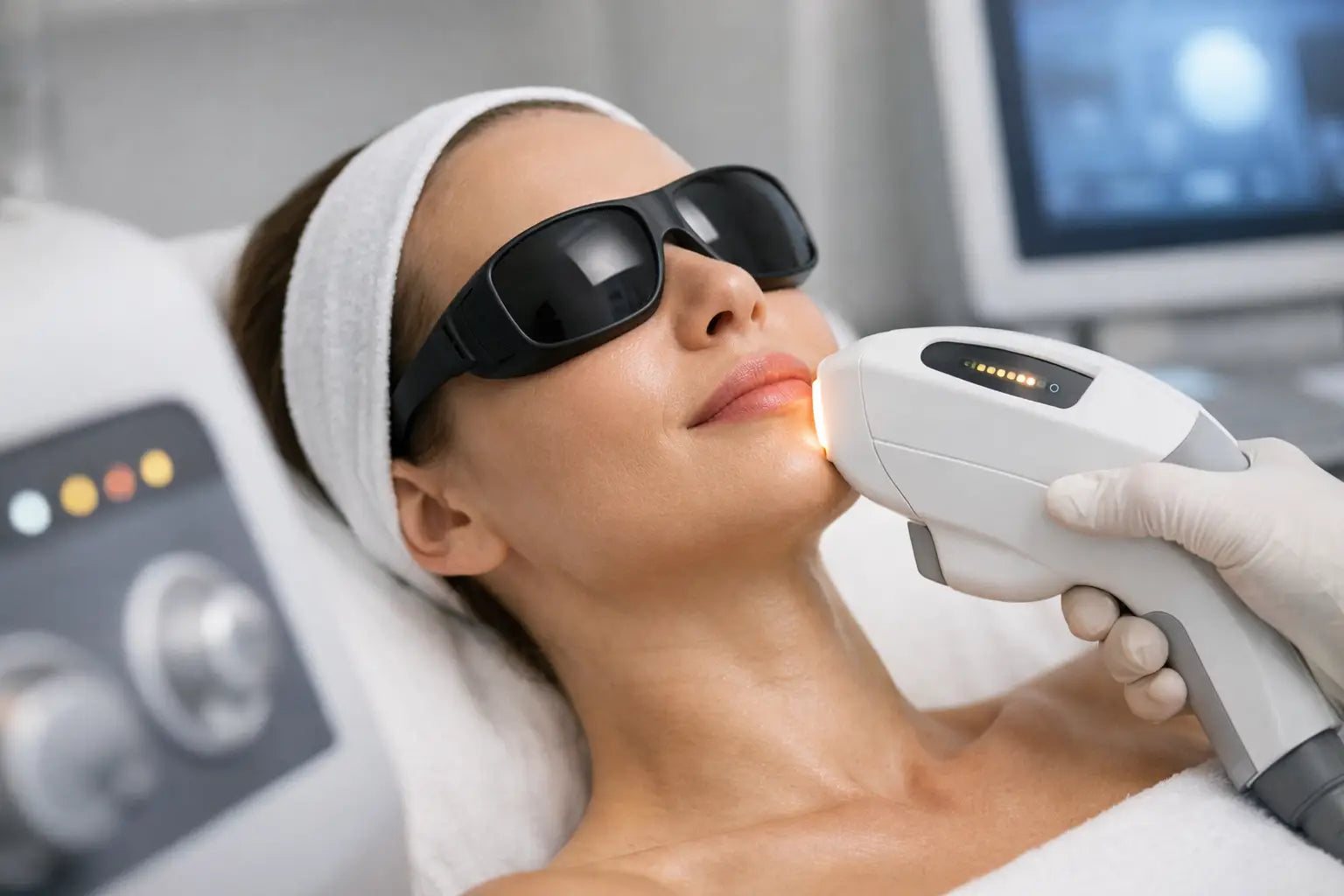
Protect your eyes by never flashing toward them or using IPL close to the eye area. Do not treat eyebrows, eyelids, or anywhere the manufacturer lists as off-limits. For facial use, follow the device’s approved treatment zones precisely.
After treatment, keep things gentle. Cool the area if it feels warm, avoid hot showers and heavy workouts for the rest of the day if your skin is sensitive, and skip fragranced products on the treated zone. You do not need an elaborate recovery routine. You need calm skin, sun protection, and patience.
When IPL Is Not the Right Choice
The most confident beauty decision is sometimes choosing not to proceed. If your skin tone or hair color is outside your device’s compatibility range, do not try to work around the rules with lower settings, fewer flashes, or a more aggressive schedule. Those adjustments cannot make an incompatible device safe or effective.
Likewise, do not use at-home IPL over skin with unexplained changes, suspicious lesions, varicose veins, or active infections. A dermatologist can help you understand what is safe for your skin and discuss alternatives when IPL is not a fit.
For eligible users, a device like the NOHA Device can bring salon-inspired convenience into your own routine. But the smartest routine is always the one that respects your skin tone, follows the directions, and gives results time to build.
Your skin is not a test area for shortcuts. Choose the right match, patch test with care, and let each session be one small, confident step away from the constant cycle of shaving and waxing.

Deja un comentario
Este sitio está protegido por hCaptcha y se aplican la Política de privacidad de hCaptcha y los Términos del servicio.