

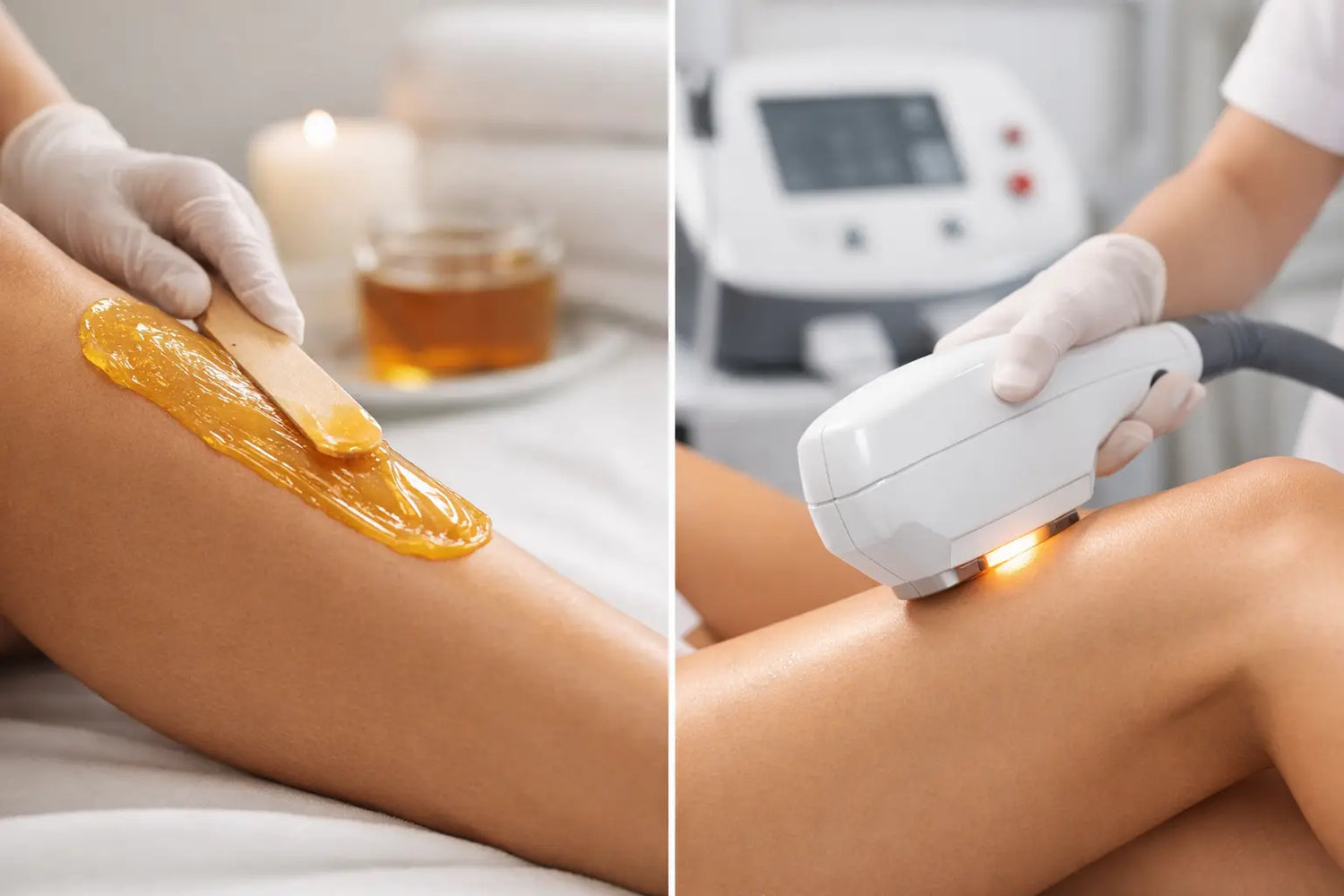
You can get smooth skin from both methods, but waxing vs IPL results feel very different once real life gets involved. One gives you a quick reset and asks you to come back again and again. The other takes more patience upfront, but the payoff is less regrowth, fewer appointments, and a routine that gets lighter over time.
If you are tired of planning your week around stubble, ingrown hairs, or salon visits, this comparison matters. The right choice is not just about removing hair today. It is about how much effort, discomfort, and money you want to keep spending six months from now.
Waxing vs IPL results at a glance
Waxing removes hair from the root, so skin usually feels smooth right away. That is the main reason people keep going back to it. The downside is that hair grows back, and it always will. You are managing regrowth, not reducing it.
IPL works differently. It uses light energy to target the pigment in the hair follicle and gradually disrupt future growth. That means the first session is not the finish line. You need consistency. But over a series of treatments, many people notice hair growing back slower, finer, and patchier, with far less maintenance than waxing.
So if your priority is immediate smoothness for an event this week, waxing wins that round. If your priority is long-term reduction and fewer grooming sessions overall, IPL usually becomes the stronger option.
What results look like after waxing
Waxing is popular because it is simple to understand. Hair is pulled out from the root, and the area feels smooth as soon as the appointment is over. Depending on your growth cycle, results can last anywhere from two to four weeks before visible regrowth starts showing up.
That said, waxing has a repetitive cost - and not just financially. You have to let hair grow out before your next session, which means dealing with that awkward in-between phase. For a lot of women, that is the most frustrating part. Smooth skin comes with a schedule, and that schedule is not always convenient.
There is also the skin factor. Some people tolerate waxing well. Others deal with redness, irritation, tenderness, or ingrown hairs every single time. If you have sensitive skin or coarse hair, waxing can start to feel like a cycle of smoothness followed by inflammation.
Over time, some people notice finer regrowth with repeated waxing, but it is not permanent hair reduction. The hair keeps coming back because the follicle is still active.
What results look like after IPL
IPL is a longer game, but that is exactly why so many women prefer it. Instead of ripping the hair out, it targets the follicle to reduce future growth. After several treatments, the usual pattern is less hair, softer regrowth, and more time between sessions.
This is where expectations matter. IPL does not usually give you salon-fresh smoothness after one use. Early on, the biggest change may be that hair starts growing back more slowly. Then you may notice patches where less hair returns. With continued use, many people reach the point where maintenance feels minimal instead of constant.
For women who are done with weekly shaving or monthly waxing, that shift can feel huge. It is less about a one-time transformation and more about getting your time back. That is the real appeal.
Because at-home IPL is designed for repeated use, the routine tends to get easier as results build. You are not booking appointments, waiting for hair to grow out, or bracing for the same pain cycle every few weeks. For a lot of users, that convenience matters just as much as the visible results.
Which one works faster?
If by faster you mean instant smoothness, waxing is faster. You walk out hair-free the same day. That is why it is still a go-to before vacations, weddings, and last-minute plans.
If by faster you mean faster to less overall hair growth in the future, IPL has the edge. It takes more sessions to get there, but it can reduce how often you need to think about hair removal at all. Waxing never really changes the long-term equation. IPL can.
This is the trade-off in the waxing vs IPL results debate. Waxing gives faster short-term results. IPL gives better long-term efficiency.
Pain, comfort, and skin recovery
Let us be honest - pain changes what people stick with. Waxing is effective, but it is rarely described as comfortable. Even if you can handle it, that split second of pain repeats over and over across every appointment. On sensitive areas, it can be a dealbreaker.
IPL is often described as much more tolerable. Some users feel warmth or a quick snapping sensation, but it is generally easier to work into a routine than waxing. That difference matters when you are treating larger areas like legs or arms.
Skin recovery can be easier with IPL too, especially for people who deal with post-wax redness or ingrowns. That does not mean IPL is for everyone without exception. Skin tone, hair color, and device instructions all matter. But for many users, it feels like a more skin-friendly option than repeatedly pulling hair out by the root.
Cost over time
Waxing can look cheaper at first because you pay per session. But the total adds up quickly when you repeat it month after month. Legs, underarms, bikini, face - once you start stacking appointments, the yearly spend is hard to ignore.
IPL usually asks for a bigger upfront investment, especially with a quality at-home device. After that, the value story changes. You are using the same device across multiple treatments and often across multiple body areas, without the same recurring salon bill.
That is why IPL tends to appeal to women who think beyond the next appointment. The question is not just what costs less this week. It is what keeps costing you next year.
Who is better off with waxing?
Waxing makes sense when you want immediate results and do not mind the upkeep. It can also be a practical choice if you are preparing for a trip or event and want smooth skin right away.
Some people simply prefer the salon experience. They like having someone else handle it, and they are comfortable sticking to a recurring routine. If that is you, waxing still does the job.
It may also be the easier short-term option for people who are not good candidates for IPL based on hair color, skin tone compatibility, or certain medical considerations. Reading device guidance carefully matters here.
Who is better off with IPL?
IPL is ideal for women who are tired of doing the same hair removal routine forever. If you want fewer touch-ups, less regrowth, and a smoother path to low-maintenance skin, it is the smarter fit.
It is especially appealing if waxing feels too painful, too expensive over time, or too inconvenient to keep up with. At-home devices have made this category much more accessible. You can treat on your own schedule, in your own space, without paying clinic prices.
For busy women, that control is a big part of the result. You are not just changing how hair grows. You are changing how much effort your routine demands.
The real answer to waxing vs IPL results
The better option depends on what kind of result you actually want. If smooth skin today is the goal, waxing delivers faster. If less hair tomorrow, next month, and later this year is the goal, IPL is usually the stronger investment.
A lot of shoppers compare these methods as if they are competing for the same outcome. They are not. Waxing is maintenance. IPL is progress. One resets the clock. The other works to slow it down.
If you are looking for a beauty routine that feels more modern, more cost-conscious, and easier to keep up with at home, IPL is hard to ignore. Brands like NOHA have made that shift feel less intimidating by bringing salon-inspired technology into a simpler, more affordable format.
The best choice is the one you will actually keep using. Smooth skin should feel freeing, not like another appointment you have to squeeze into your week.


Leave a comment
This site is protected by hCaptcha and the hCaptcha Privacy Policy and Terms of Service apply.