

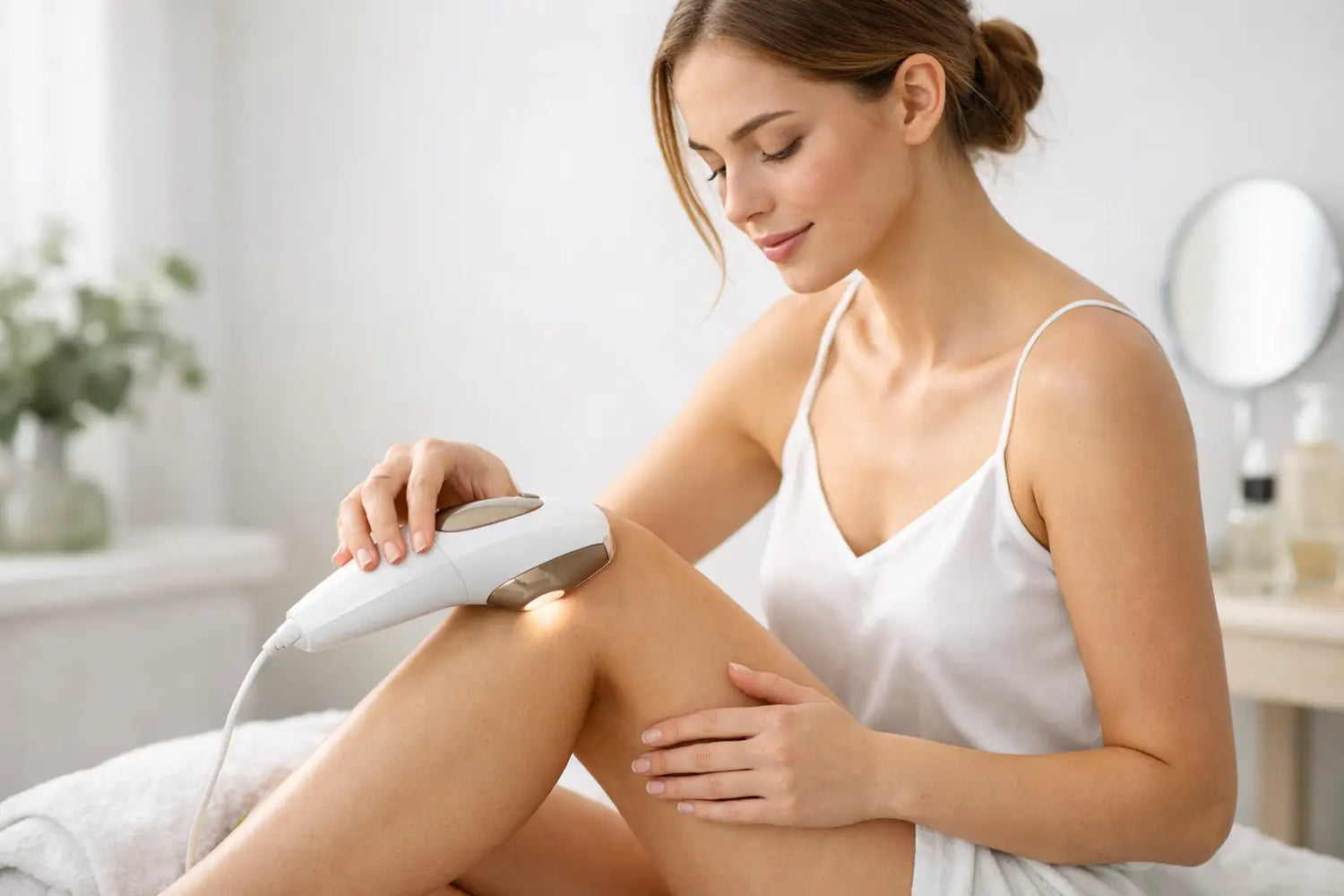
Sensitive skin can make every hair-removal decision feel like a gamble. Shaving can leave you itchy by the next day, waxing can cause redness that lingers, and even a new body lotion can trigger a reaction. This guide to IPL for sensitive skin is designed to help you get the smooth, low-maintenance results you want while treating your skin with the care it deserves.
IPL can be a smart at-home alternative to repetitive shaving and salon appointments, but the best results do not come from rushing. They come from starting gently, following the device instructions, and paying attention to what your skin is telling you.
How IPL Works on Sensitive Skin
IPL stands for Intense Pulsed Light. It uses pulses of broad-spectrum light that target pigment in the hair. The light becomes heat at the hair follicle, helping disrupt the growth cycle over a series of treatments. That is why IPL works best when hair is darker than the surrounding skin and why consistency matters more than using the highest setting right away.
Sensitive skin does not automatically mean IPL is off-limits. It simply means your approach needs to be more intentional. A little warmth or mild redness immediately after a treatment can be normal, especially on areas such as the underarms or bikini line. Burning, blistering, swelling, or redness that does not settle are not results to push through.
The goal is comfortable progress, not an aggressive session. Start low, assess your skin, then build only when your skin is calm and your device instructions allow it.
Start With a Patch Test Every Time You Need One
A patch test is the easiest way to make an informed decision before treating a larger area. It is especially useful before your first IPL session, when trying a new body area, after a break from treatments, or when your skin-care routine has changed.
Choose a small, discreet spot in the area you plan to treat. Shave the area, clean and dry it completely, then use the lowest recommended setting. Wait the full amount of time listed in your device manual, often 24 hours, before moving forward. Check for excessive redness, tenderness, itching, swelling, or changes in pigmentation.
If your skin remains calm, you can treat the larger area at that same conservative level. A clear patch test does not mean you should jump to maximum intensity. Think of it as your skin giving you permission to begin, not permission to rush.
Prep Your Skin for a More Comfortable IPL Session
The prep matters as much as the pulse. Your skin should be clean, dry, and free of products that could make it more reactive or interfere with light delivery. Shave the treatment area closely first. Do not wax, thread, tweeze, or use an epilator beforehand, because IPL needs the hair root present beneath the skin.
For sensitive skin, keep the 24 to 48 hours before treatment simple. Avoid anything that already makes your skin feel hot, dry, or exposed. That includes:
- Direct sun exposure, tanning beds, and self-tanner on the treatment area
- Exfoliating acids, scrubs, or at-home peels
- Retinoids and strong acne treatments, unless a clinician tells you otherwise
- Fragranced body products that tend to sting or cause irritation
Choose a Setting Your Skin Can Handle
Higher intensity is not automatically better. The right setting is one that is effective while still being tolerable for your skin. For many people with sensitive skin, beginning at a lower intensity and increasing gradually over multiple sessions is the more comfortable path.
During treatment, your skin should feel warm, with a quick snap-like sensation at most. It should not feel sharply painful. If it does, stop and lower the setting for your next test, or pause treatment entirely if discomfort continues.
Move methodically and avoid flashing the same exact spot repeatedly in one session. Overlapping slightly may be permitted depending on your device directions, but repeatedly treating one area because you want faster results can create unnecessary irritation. IPL rewards routine, not overdoing it.
At-home devices such as the NOHA Device™ are designed to make salon-inspired hair reduction more accessible, but comfort still comes first. Use only the approved intensity levels and schedule recommended for your specific device.
Treat the Most Sensitive Areas With Extra Care
Not all body areas respond the same way. The lower legs may tolerate treatment easily, while the underarms, bikini line, upper lip, and jawline can feel more reactive. Hormonal hair growth on the face may also require more patience and a steady schedule.
For an area that is especially sensitive, use the lower end of your device’s recommended intensity range, make sure the skin is fully dry, and treat in a cool, comfortable room. Do not use IPL on irritated skin, cuts, rashes, sunburn, tattoos, moles, or areas with darker spots unless your device specifically provides safe coverage instructions. Never flash directly over the eyes or use an IPL device on the eyelids or eyebrows.
The bikini line deserves one more reminder: treat only the external areas your device says are safe. Inner genital skin and mucosal areas should not be treated with IPL.
Calm Your Skin After Treatment
Your post-treatment routine should feel boring in the best possible way. Skip the perfumed products and give your skin a chance to settle. A cool compress can feel great if the area is warm, and a gentle, fragrance-free moisturizer can help support your skin barrier.
For the next day or two, avoid hot showers, saunas, intense workouts, exfoliation, and friction from tight clothing if the treated area is feeling tender. Keep the area out of direct sun, and use broad-spectrum sunscreen on exposed skin. Sun protection is non-negotiable because freshly treated skin can be more prone to irritation and uneven pigmentation.
Do not judge your results the next morning. IPL targets hair over growth cycles, so hair reduction is gradual. Some hairs may appear to grow before shedding, and that can be part of the process. Follow your device’s treatment schedule rather than treating extra often out of frustration.
When to Pause and Ask a Professional
Confidence is great. Ignoring a strong skin reaction is not. Stop using IPL and seek advice from a qualified health professional if you experience blistering, burns, significant swelling, persistent pain, scabbing, or pigment changes. If you have eczema, psoriasis, rosacea, active acne, melasma, or a history of post-inflammatory hyperpigmentation, personalized guidance before starting is a smart move.
You should also pause if your skin is already compromised. A new rash, a recent sunburn, a fresh tattoo, a chemical peel, or a breakout in the treatment area is a reason to wait. Smooth skin is never worth compromising skin health.
Your Sensitive-Skin IPL Routine Can Still Deliver
IPL is not supposed to feel like another harsh beauty ritual. When you patch test, shave instead of wax, start conservatively, and protect your skin from heat and sun, it can fit beautifully into a lower-maintenance routine.
Your best setting is not the highest number on the device. It is the one that lets your skin stay calm while you show up consistently - and gives you the freedom to spend less time dealing with unwanted hair.

Leave a comment
This site is protected by hCaptcha and the hCaptcha Privacy Policy and Terms of Service apply.