

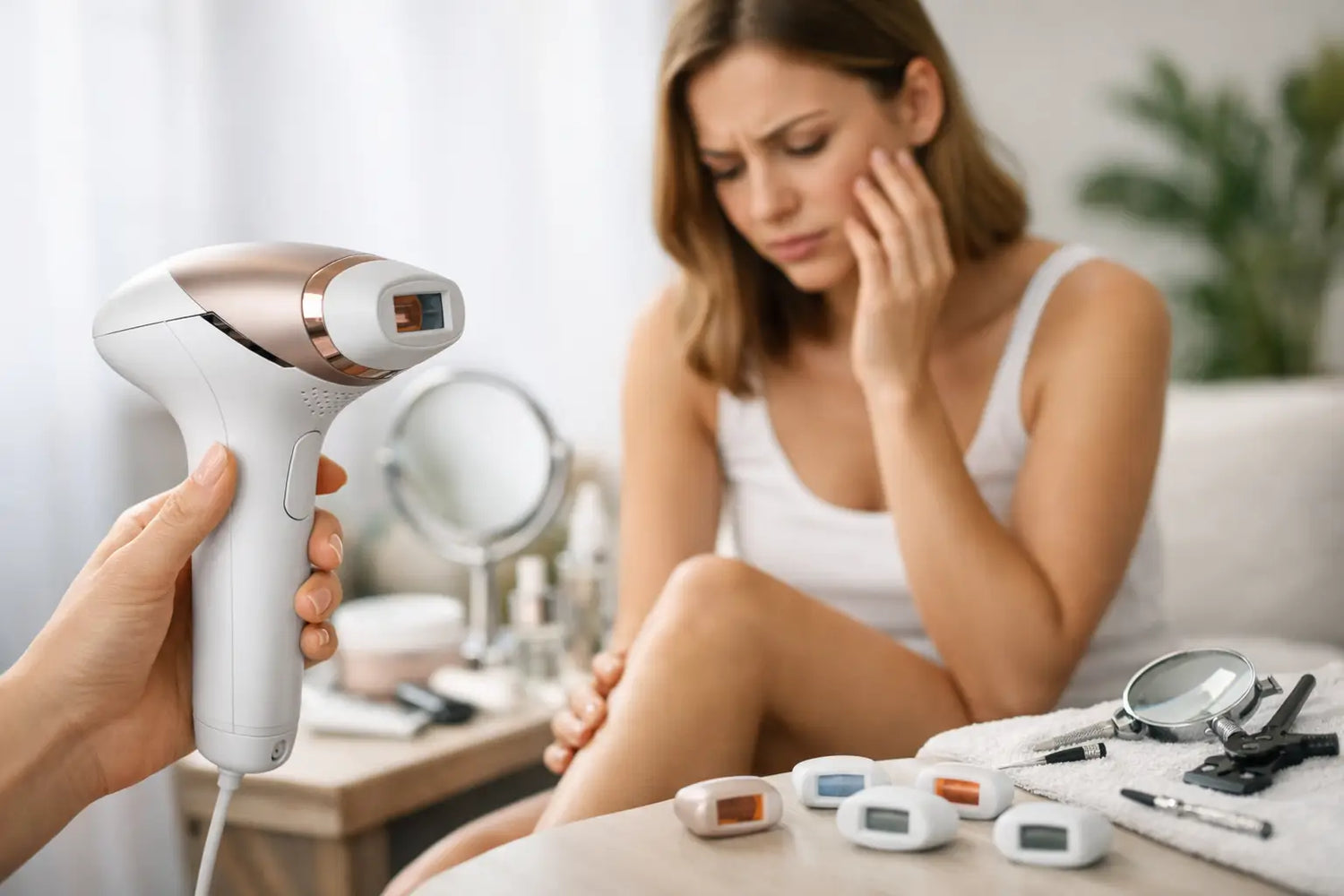
You bought an IPL device to spend less time shaving and more time enjoying smooth skin. So when the hair seems to be growing back, it is completely fair to ask: why is IPL not working? The answer is usually not that your device has failed. More often, it comes down to timing, prep, hair and skin compatibility, or expecting a permanent result before the hair-growth cycle has had time to respond.
IPL hair removal can be a game-changing at-home routine, but it is not a one-treatment miracle. Use it consistently and correctly, and you can target the hair at the root over time for noticeably less regrowth and fewer shaving days.
Why Is IPL Not Working Right Away?
IPL works by sending pulses of light into the pigment in the hair. That light becomes heat and helps disrupt the hair follicle's ability to regrow hair. The catch is that IPL is most effective when a hair is in its active growth phase.
Your hairs are not all in that phase at once. Some are growing, some are resting, and some are getting ready to shed. That is why a single session cannot treat every follicle equally. It also explains why you may still see hair after your first few treatments.
Most people need a consistent initial treatment schedule before they see a meaningful reduction in growth. Early results may look like slower regrowth, softer hair, or sparse patches instead of instantly hair-free skin. Those changes count. They show that the routine is beginning to work.
8 Reasons Your IPL Results May Be Delayed
1. You are treating too inconsistently
Skipping treatments is the fastest way to slow your progress. IPL needs repeated sessions because it can only effectively target hairs in the right growth stage. If you treat once, wait several weeks, then treat again when you remember, you may miss the rhythm that helps create results.
Follow the schedule in your device instructions during the initial phase. Once hair growth has reduced, maintenance sessions can help you stay smoother for longer. Think of IPL as a beauty routine, not a one-and-done appointment.
2. You are expecting hair to disappear immediately
After treatment, hair does not always vanish overnight. In some cases, treated hairs remain visible while they gradually shed. It can look like regrowth even though the follicle has been affected.
Give your skin and hair time between sessions. Avoid judging your full outcome after one treatment or one week. Take a photo before you start and another every few weeks in the same lighting. Progress is much easier to spot when you are not relying on memory alone.
3. You did not shave before treating
For most at-home IPL devices, shaving is the preferred prep step. The goal is to leave the hair root beneath the skin while removing the visible hair above it. This allows the light energy to focus where it matters.
Waxing, threading, tweezing, and epilating remove the hair from the root. If there is no hair root in place, IPL has much less pigment to target. Shave before your session, but avoid methods that pull the hair out between treatments.
4. Your skin is not clean and dry
Lotions, body oils, deodorant, makeup, self-tanner, and residue from skincare products can interfere with a comfortable, consistent treatment. They may create a barrier between the device and your skin, and some ingredients can make skin more sensitive to light.
Start with freshly cleansed, fully dry skin. Skip fragranced products, tanning products, and heavy creams on the treatment area unless your device instructions specifically say otherwise. Afterward, keep the area calm with gentle, non-irritating skincare.
5. Your intensity level is too low
It is natural to start cautiously, especially if you are new to IPL. But if your device has multiple energy levels and you always use the lowest setting, your treatments may not be strong enough to deliver the best possible result for your skin and hair combination.
Always begin with a patch test and follow your device's safety guidance. If your skin tolerates treatment well, gradually use the highest comfortable setting that is approved for you. IPL should not feel like a painful salon appointment, but it should be used with intention, not fear.
6. Your hair color and skin tone are not an ideal match
IPL relies on contrast between the pigment in the hair and the surrounding skin. It tends to work best on naturally dark blonde, brown, or black hair paired with skin tones supported by the device. Blonde, gray, white, and red hair may not contain enough pigment for IPL to target effectively.
Your current tan matters too. Tanned skin has more pigment, which can affect both effectiveness and safety. Do not treat recently tanned, sunburned, or artificially tanned skin. Check your device's skin-tone and hair-color suitability information before beginning, and stop if you are unsure whether IPL is right for you.
7. You are missing areas or treating too quickly
A rushed session can leave untreated strips of skin. On curved areas like underarms, knees, bikini lines, and ankles, it is easy to lose contact or flash the same spot unevenly.
Work methodically in small sections. Keep the treatment window flat against the skin and overlap slightly only as your device instructions allow. Do not repeatedly flash the same area in one session in an attempt to speed up results. More is not always better, and over-treating can irritate skin.
8. Hormones or medications may be affecting growth
Some hair growth is influenced by hormones, including changes related to pregnancy, postpartum shifts, menopause, or conditions such as PCOS. In those cases, IPL may still help reduce visible hair, but you may need more regular maintenance than someone without hormonally driven growth.
Certain medications and skincare treatments can also increase photosensitivity. If you use prescription acne treatments, retinoids, or medications that make you more sensitive to light, speak with a healthcare professional before using IPL. Do not use an IPL device over tattoos, moles, broken skin, or areas with active irritation.
How to Get Better IPL Results at Home
A better routine is often the real fix. Shave the area, clean and dry your skin, complete a patch test, and treat on the recommended schedule. Stay out of direct sun around treatment when possible, and use sunscreen on exposed areas to help protect your skin.
It also helps to keep your expectations realistic. IPL is designed for long-term hair reduction, not a promise that every hair will disappear forever after a few flashes. Many people enjoy a major reduction in regrowth and use occasional touch-ups to maintain their results.
If you are using a device such as the NOHA Device™, consistency is where the value builds. A short at-home session can fit around your life without booking another wax appointment, paying for another clinic visit, or reaching for the razor every other day.
When to Pause and Ask for Advice
Pause treatment if you notice persistent redness, blistering, swelling, significant discomfort, or changes in skin color. Mild temporary warmth or redness can happen, but your skin should not be pushed past its limits.
You should also get professional guidance before treatment if you have a skin condition in the area, a history of light sensitivity, or any uncertainty about a medication. At-home beauty should feel empowering, and that starts with using the technology safely.
Give Your Routine Enough Time to Work
The most effective IPL plan is not the most complicated one. It is the one you can repeat: shave, treat properly, stay consistent, and track the small changes as they add up. Smooth skin is rarely the result of one perfect session. It is the payoff of a routine that finally works with your life instead of adding another appointment to it.

Leave a comment
This site is protected by hCaptcha and the hCaptcha Privacy Policy and Terms of Service apply.