

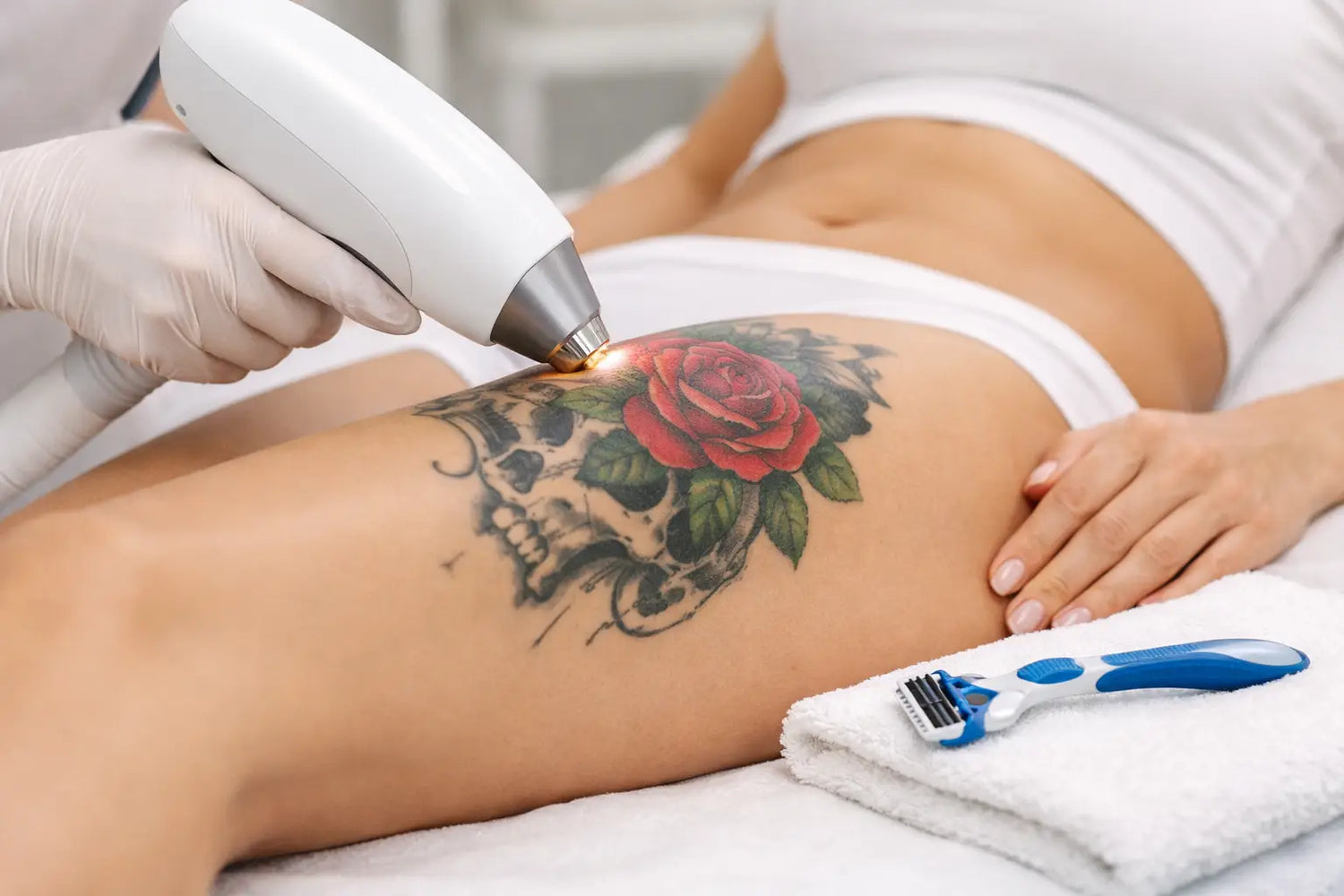
Your tattoo was an investment in your look, not an area you should have to hide under unwanted hair. This guide to tattoo safe hair removal helps you keep skin soft and smooth while protecting the color, detail, and healing process behind your ink.
The simple rule is this: do not use IPL or laser hair removal directly over a tattoo. Light-based devices target pigment, and tattoo ink is pigment. That means the energy can be drawn to the tattoo instead of the hair follicle, creating unnecessary heat and raising the risk of burns, blistering, or changes to the artwork.
That does not mean your tattooed area is off-limits for grooming forever. It means choosing the right method for the right spot.
Why tattoos and IPL do not mix
At-home IPL works by sending pulses of light into the hair follicle. The pigment in the hair absorbs that light, which is why IPL is designed for hair reduction rather than shaving at the surface.
Tattoo ink can absorb that same light energy. A dark, saturated tattoo is especially likely to react, but lighter ink is not a green light either. Ink colors, tattoo depth, your skin tone, device settings, and the age of the tattoo can all affect how skin responds. There is no safe shortcut that turns an inked area into an IPL treatment zone.
Never flash an IPL device directly over a tattoo, even for one quick pulse. Do not rely on concealer, makeup, bandages, tape, or a DIY cover to make the area safe. Those workarounds can shift, leave gaps, or create a false sense of security. Follow your device instructions and treat only clear, uninked skin.
If you use an at-home device such as the NOHA Device, keep every flash away from tattooed skin and use it only where the skin is appropriate for IPL treatment. Smooth skin is the goal. Protecting your skin and your ink comes first.
Guide to tattoo safe hair removal methods
The best method depends on whether hair grows directly on the tattoo, right beside it, or across a larger area that includes both inked and uninked skin. It also depends on how sensitive your skin is and whether your tattoo is fully healed.
Shaving is the simplest option for inked skin
For most healed tattoos, shaving is the easiest tattoo-safe choice. A clean, sharp razor removes hair above the skin without using light or pulling at the tattooed area. Use a gentle shaving cream or fragrance-free lubricant, shave with a light hand, and rinse with cool or lukewarm water.
The trade-off is maintenance. Hair grows back quickly, which can bring you right back to the repetitive routine you may be trying to escape. Still, shaving is an excellent solution for hair growing directly on a tattoo or for touching up small sections between longer-lasting treatments on nearby bare skin.
Avoid shaving a fresh tattoo. The skin needs time to close and settle before a blade touches it. Your tattoo artist should be your first source for aftercare timing, especially if you are dealing with peeling, scabbing, redness, or tenderness.
Trimming offers a no-fuss middle ground
An electric body trimmer can be a great choice when you want less irritation than shaving. It keeps hair short without scraping a blade across the skin, making it useful for textured areas or skin that gets razor bumps easily.
Choose a clean trimmer, use a guard if needed, and avoid pressing hard. Trimming will not leave the ultra-smooth feel of a close shave, but it is fast, low effort, and kind to healed tattooed skin.
Depilatory creams require a careful test
Hair removal creams dissolve hair at or just below the surface. They may work on fully healed tattooed skin, but they are not automatically the right choice. Fragrance, active ingredients, and sensitive skin can be a rough combination, especially if your tattooed area tends to feel dry or reactive.
Patch test on a small area of uninked skin first, then wait the full recommended time to see how your skin reacts. Never use depilatory cream on a new tattoo, broken skin, sunburned skin, or an area with irritation. If there is any burning, stinging, or redness beyond mild temporary sensitivity, rinse it off immediately and skip that method going forward.
Waxing can work, but it is not for every tattooed area
Once a tattoo is fully healed, waxing does not use light and generally will not fade ink. But it pulls hair from the root, which can cause temporary redness, sensitivity, ingrown hairs, or lifted skin if your barrier is already stressed.
Waxing may be a fit for someone who wants longer-lasting smoothness than shaving and tolerates waxing well. It is less appealing if you are prone to bumps, use exfoliating acids or retinoids on the area, or simply do not want the discomfort. Never wax healing ink, flaky skin, or skin that is irritated from another hair removal method.
Electrolysis may be worth discussing for small tattooed areas
Electrolysis treats individual follicles with a tiny probe rather than broad pulses of light. Because it does not depend on targeting pigment in the same way IPL does, it may be an option for hair growing directly through a healed tattoo.
It is a slower, appointment-based process and results depend heavily on the provider's skill. For a tattooed area, choose a qualified professional who understands both electrolysis and tattooed skin. Ask directly about their experience treating hair near or within tattoos, and do not proceed if they seem casual about skin safety.
How to treat hair around a tattoo with IPL
You can still use IPL on uninked skin surrounding a tattoo when the area is suitable for your device and your skin tone and hair color. The key is accuracy, not speed.
First, inspect the treatment area in bright light. Find every edge of the tattoo, including fine-line details, faded shading, tiny symbols, and any ink that extends farther than you remembered. Shave the uninked treatment area if your device instructions call for it, but leave the tattoo itself out of your treatment plan.
Then treat only the clear skin around the artwork. Keep a conservative buffer between the flash window and the tattoo rather than trying to work right up against the linework. Your device manual is the final word on spacing and eligible treatment areas. If the tattoo is large, wraps around a limb, or makes the boundary hard to judge, choose shaving or trimming for that zone instead.
Do not treat over tattoos that are faded, old, or partially removed. Faded ink is still ink. The same goes for cosmetic tattoos, permanent makeup, and small dots that may be easy to overlook.
Fresh tattoos need a full pause
A new tattoo is a controlled skin wound. While it heals, it can be vulnerable to infection, scarring, pigment loss, and irritation. Skip shaving, waxing, depilatory creams, IPL, exfoliating tools, and strong skincare products until your tattoo artist confirms the area has healed completely.
Healing time is not identical for everyone. Surface peeling may stop before deeper layers have fully recovered. If the skin looks shiny, feels tight, remains tender, or has raised or scabbed areas, wait. When in doubt, ask your artist or a dermatologist instead of testing a hair removal method on skin that is still recovering.
Signs to stop and give skin a break
Hair removal should not leave you in pain for days. Stop using a method and let the area recover if you notice intense burning, swelling, blisters, bleeding, a rash, spreading redness, or unusual changes around your tattoo. Seek medical guidance promptly for signs of infection, such as warmth, pus, fever, or worsening pain.
For mild razor irritation, keep your routine simple: cleanse gently, avoid friction, skip fragranced products, and give skin time before your next session. More pressure, more passes, or stronger products rarely create better results.
Make smooth skin work with your ink
The smart approach is not choosing one hair removal method for every inch of your body. Use IPL where skin is clear and appropriate, and choose shaving, trimming, or professional electrolysis where tattoo pigment is present. That gives you more freedom to reduce the repetitive grooming you do not want without gambling with the artwork you love.
Your tattoos deserve the same thoughtful self-care as the rest of your beauty routine. Work around them carefully, respect fresh ink, and let smooth skin and bold body art have their moment together.

Leave a comment
This site is protected by hCaptcha and the hCaptcha Privacy Policy and Terms of Service apply.