

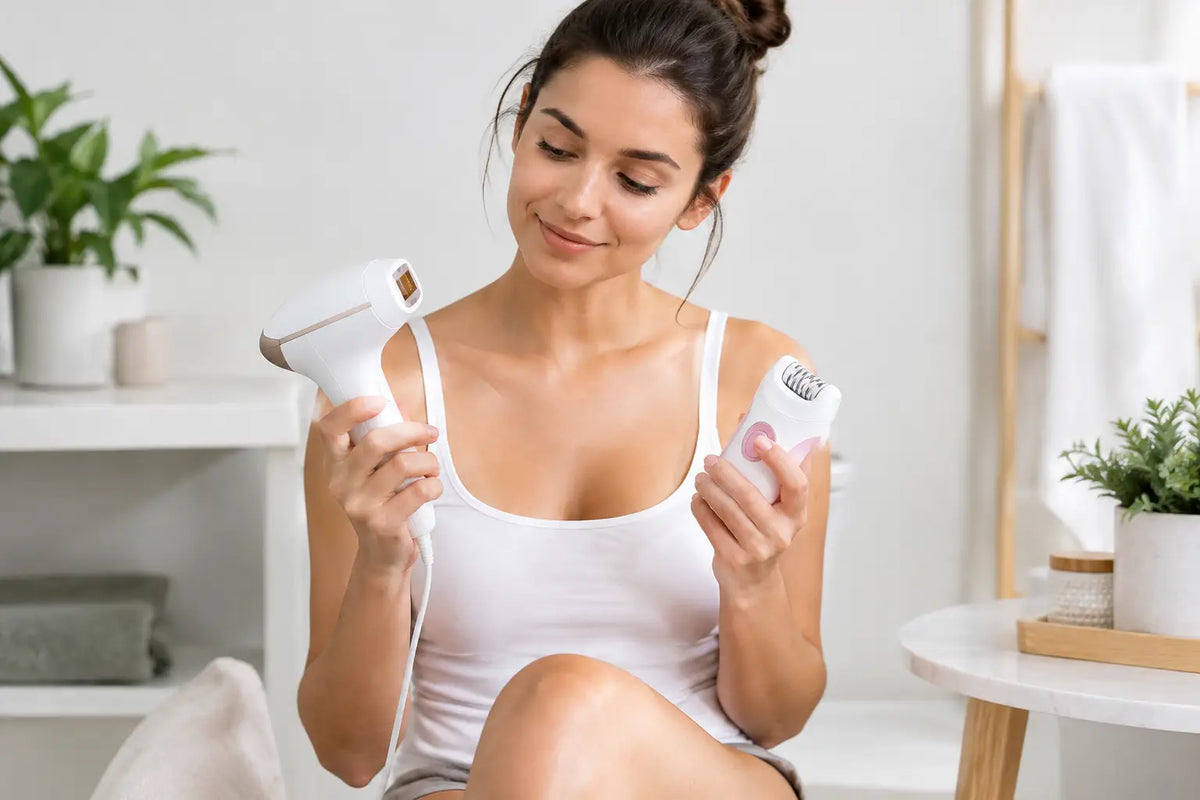
Shaving again two days after you shaved is frustrating. So is booking a wax, bracing for the pull, and watching the cost add up. When you are comparing at home IPL versus epilator, the real question is not just which one removes hair today. It is which one gives you more freedom from the routine over time.
Both options can help you move beyond a razor, but they work in completely different ways. An epilator pulls hair out from the root. At-home IPL uses pulses of light to target the pigment in hair and help reduce regrowth with consistent treatments. One delivers immediate removal. The other is designed for a lower-maintenance future.
At-Home IPL Versus Epilator: The Key Difference
An epilator is a mechanical hair-removal tool. Its rotating tweezers grip multiple hairs at once and pull them from the follicle, much like waxing. You can see and feel the result right away because the hair is gone at the surface and below it. Since the follicle is still active, however, new hair eventually grows back.
At-home IPL, short for intense pulsed light, is not a plucking method. The light is absorbed by melanin, the pigment in the hair. That energy is intended to disrupt the hair-growth cycle so treated hairs grow back more slowly and, over time, may become noticeably finer and less visible. Results require patience and regular sessions, especially at the beginning.
This difference shapes the entire experience. An epilator is about removing what is there now. IPL is about reducing how much comes back later.
Which Option Lasts Longer?
If you mean the immediate smooth period after one treatment, an epilator can keep skin smooth for roughly a few weeks because it removes hair from the root. The timing varies by body area and your personal growth cycle, but it generally lasts longer than shaving.
If you mean long-term reduction in hair growth, at-home IPL has the stronger advantage. IPL treatments are usually performed on a schedule over several weeks, followed by occasional maintenance sessions as needed. You will not get the dramatic, completely hair-free finish from a single session that you get from an epilator. What you can work toward is less hair to manage, fewer grooming sessions, and softer regrowth.
That is why IPL can feel like the smarter investment for underarms, bikini lines, legs, and other areas you are tired of repeatedly shaving or waxing. The payoff builds with consistency. An epilator resets the cycle. IPL aims to change it.
Pain and Comfort: Be Honest About the Trade-Off
Epilators are effective, but they can be uncomfortable. Every pass involves pulling hairs from the root, and sensitive areas can make the process feel especially intense. Some people get used to the sensation. Others decide quickly that the smooth result is not worth the pinch, redness, or ingrown hairs that can follow.
At-home IPL is often described as a warm snap against the skin. The feeling depends on your sensitivity, the treatment area, and the device setting. It does not pull hairs out one by one, which is a major reason many people find it more comfortable than epilating or waxing.
Comfort is personal, so do not let anyone tell you there is one universal answer. But if you avoid wax appointments because you dread the pain, IPL is often the more appealing route. A quality device with adjustable intensity settings lets you begin at a comfortable level and increase only as your skin tolerates it.
Time: Fast Results Now or Less Work Later?
An epilator may seem faster because it gives instant hair removal. In practice, treatment can take time, especially on legs, where you may need slow, repeated passes to catch short hairs. You also have to wait until hair has grown long enough for the device to grip it before each session.
IPL has a different rhythm. You shave the area first, then use the device according to its treatment instructions. Early sessions are more frequent because you are targeting hairs in their active growth phase. Once you reach your desired reduction, maintenance is usually far less demanding than a lifetime of shaving, waxing, or epilating.
For busy women, that distinction matters. A few minutes of focused self-care at home can be easier than constantly checking for stubble, growing out hair for waxing, or squeezing salon appointments into an already full calendar.
Cost: Look Beyond the Device Price
An epilator can be inexpensive compared with professional hair removal, and it does not require refills. That makes it a reasonable choice if you want a one-time purchase and do not mind ongoing use.
But low upfront cost is not always low long-term effort. You will continue using the epilator as long as you want smooth skin because it does not reduce the underlying growth pattern. The cost may stay manageable, but the time and discomfort remain part of the deal.
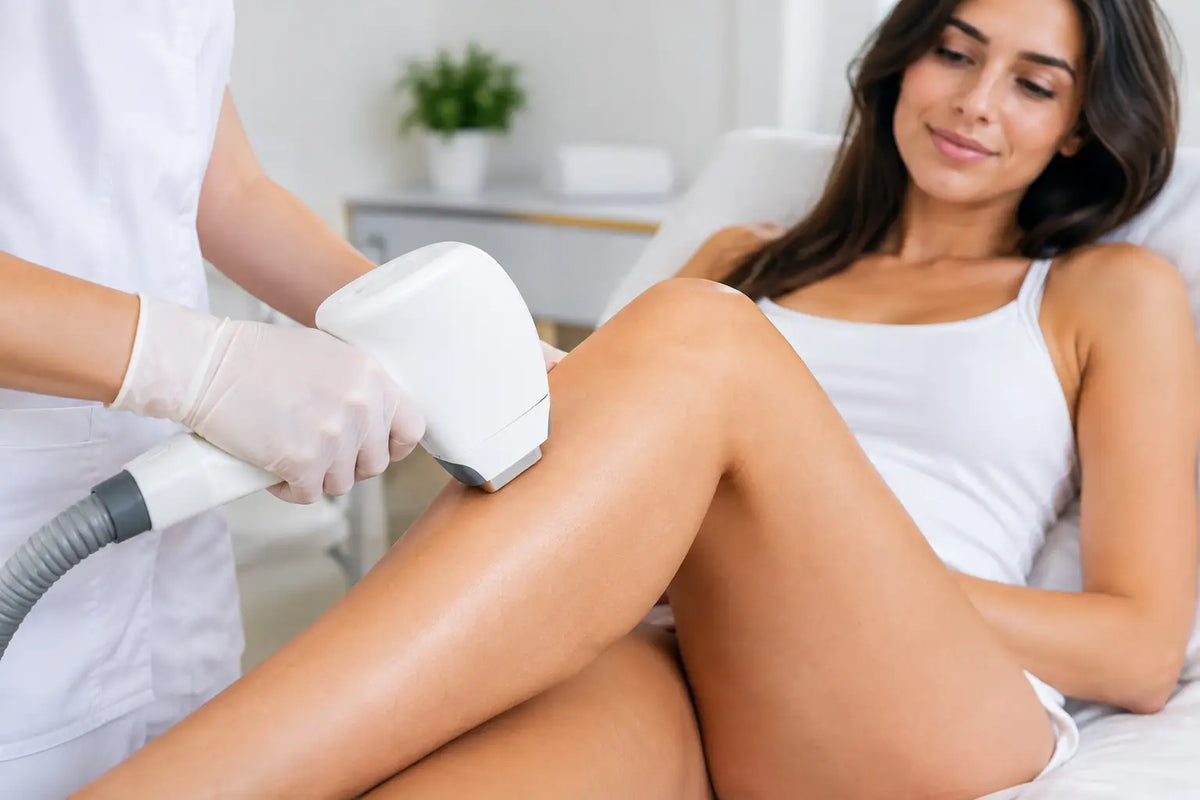
At-home IPL devices usually cost more upfront, yet they are positioned as an alternative to recurring waxes and costly clinic appointments. For someone who regularly pays for bikini waxes, underarm waxes, or full-leg treatments, the math can become compelling. You are buying the ability to treat on your own schedule, in your own space, without paying per appointment.
NOHA brings that salon-inspired idea home with an IPL device designed for women who want a more affordable, lower-maintenance path to smooth skin.
Skin Tone, Hair Color, and Safety Matter
IPL is not a one-size-fits-all treatment. Because it targets pigment in hair, it generally works best when there is a clear contrast between the hair and surrounding skin. It is typically less effective on very light blonde, gray, white, or red hair. Some skin tones may not be suitable for certain IPL devices, so always check the device's skin-tone and hair-color guidance before starting.
Epilators do not rely on hair pigment, which makes them more universal from that standpoint. They can remove hair of different colors, provided the hairs are long enough for the tweezers to catch. Still, they can irritate sensitive or compromised skin.
Whichever method you choose, protect your skin. Do not use an epilator over cuts, active irritation, or inflamed ingrown hairs. With IPL, follow the safety directions closely, avoid treating recently tanned skin, and perform a patch test before a full treatment. If you have a skin condition, take medications that increase light sensitivity, or are unsure whether IPL is appropriate for you, ask a qualified healthcare professional first.
When an Epilator Is the Better Choice
An epilator may be right for you if you want hair removed immediately, your hair color is not compatible with IPL, or you prefer a simple device with no treatment schedule. It can also be useful for occasional touch-ups when you are comfortable with the sensation and your skin handles plucking well.
It is a practical tool, not a failure or a lesser choice. The best method is the one you will actually use consistently and safely.
When At-Home IPL Makes More Sense
At-home IPL is a strong fit if repetitive hair removal has become a chore you want to reduce. It is especially appealing if you are tired of razor burn, scheduling waxes, or spending money on salon visits that have to be repeated month after month.
Choose IPL when your goal is not simply smooth skin this weekend, but a routine that demands less from you over the coming months. Be ready to follow the schedule, stay patient through the early phase, and use the device safely for your skin and hair type. Those habits are what turn an at-home device into a real long-term beauty upgrade.
The Better Choice Depends on Your Goal
For instant removal, an epilator wins. For a potentially smoother, lower-maintenance future, at-home IPL is hard to beat. The decision comes down to whether you want to keep removing regrowth or start working toward less of it.
Your routine should make you feel confident, not constantly behind. Pick the method that fits your skin, your lifestyle, and the amount of time you want to give hair removal next month, not just tonight.


Deja un comentario
Este sitio está protegido por hCaptcha y se aplican la Política de privacidad de hCaptcha y los Términos del servicio.