

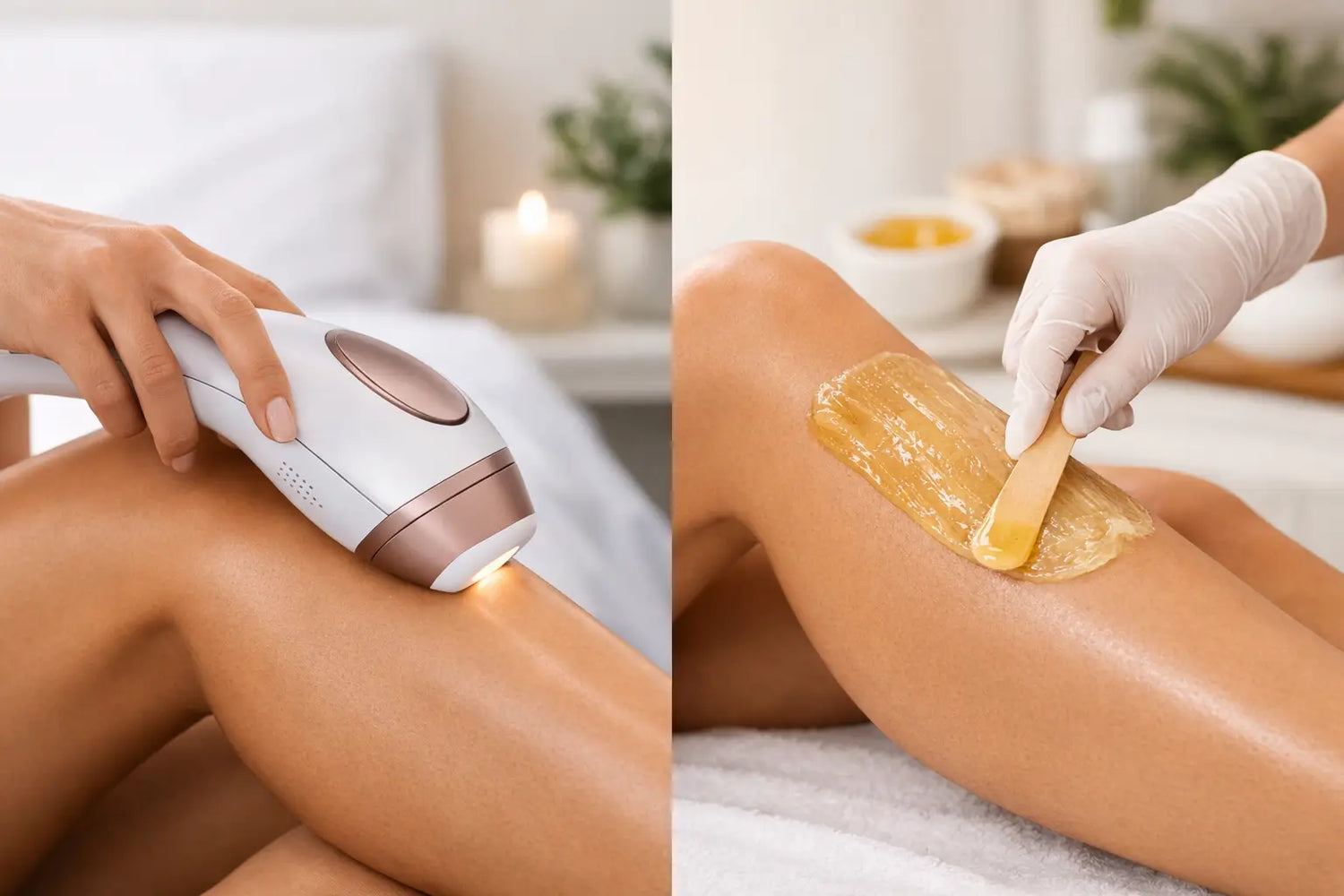
If you have ever braced yourself before ripping off a wax strip, you already know this question is not theoretical. At home IPL vs waxing pain is one of the biggest deciding factors for anyone who wants smooth skin without turning hair removal into a monthly dread session.
The short answer is simple. For most people, at-home IPL feels noticeably more comfortable than waxing. Waxing pulls multiple hairs out from the root in one fast, intense motion. IPL uses flashes of light that are often described as a quick warm snap against the skin. That does not mean IPL is sensation-free for everyone, and it does not mean waxing always feels unbearable. But if pain tolerance is a major part of your decision, IPL usually wins.
At home IPL vs waxing pain: the real difference
Waxing pain is immediate, sharp, and hard to ignore. The discomfort comes from yanking the hair out by force, especially in areas where the skin is thinner or more sensitive. Legs might feel manageable for one person and brutal for another, but underarms, bikini lines, and upper lip areas are where waxing tends to get serious fast.
At-home IPL works differently. Instead of removing the hair in that moment, it targets the hair follicle with pulses of light to reduce future growth over time. Because the hair is not being ripped out, the feeling is usually much milder. Most users compare it to a rubber-band snap or a quick burst of heat. Some areas may feel more noticeable than others, but the sensation is brief and usually fades as soon as the flash is over.
That distinction matters. Waxing hurts in a way that can make you tense up before every pull. IPL tends to be more about temporary sensitivity during treatment, not a dramatic painful event you have to psych yourself up for.
Why waxing often feels worse
There is no mystery here. Waxing is aggressive by design. It grips the hair and pulls it out from the follicle, and your nerves feel that immediately.
Pain can be stronger with waxing when the hair is longer, the area is delicate, or your skin is already irritated. Timing matters too. Some people feel more sensitive around their period, after exfoliating too hard, or after sun exposure. Even a good wax can leave behind redness, tenderness, bumps, or that sore post-wax feeling that lingers for hours.
Another issue is repetition. Waxing is not a one-time pain. It comes back again and again because the hair comes back again and again. So even if each session only lasts a short time, you are signing up for recurring discomfort as part of your routine.
How IPL pain usually feels at home
At-home IPL is often described as manageable because the discomfort is short and localized. You feel the flash, then it is gone. There is no tearing, no strip removal, and usually no lingering soreness that defines the rest of your day.
That said, "painless" can mean different things to different people. If you have very sensitive skin or you are treating an area like the bikini line, you may still notice some sting or heat. But the experience is usually far less dramatic than waxing, especially once you get used to it and find a comfortable intensity setting.
A quality device also makes a difference. Built-in skin sensors, adjustable energy levels, and user-friendly treatment windows can help reduce unnecessary discomfort. That is one reason many shoppers move toward modern at-home devices instead of sticking with salon methods that feel expensive and intimidating.
It depends on the body area
Not every zone feels the same, and that is true for both methods. On legs, waxing can be tolerable for some people because the skin is less delicate, though large sections can still sting a lot. IPL on legs is often one of the easiest starting points because the area is broad and generally less sensitive.
Underarms are a different story. Waxing there can be intense because the hair is often coarser and the skin is more reactive. IPL may still feel a little sharp in that area, but many people find it much easier to handle than repeated waxing.
The bikini area is where pain really becomes a deciding factor. Waxing is famous for being rough there. IPL is not completely sensation-free in that zone, but for many users it feels more controlled and less overwhelming. If your goal is a lower-stress routine, this is often where the difference becomes obvious.
For facial areas, both methods require extra care. Waxing can irritate delicate skin and lead to redness. IPL needs proper use according to device guidelines, especially on the face, but many people prefer brief light pulses over repeatedly pulling at sensitive skin.
Pain now vs comfort later
One of the biggest reasons IPL stands out is that it is not just about how treatment feels today. It is also about what your routine feels like months from now.
Waxing keeps you on a cycle. You wait for regrowth, book or do another session, go through the pain again, and repeat. There is no real exit from that pattern unless you switch methods.
IPL is different because it is designed to reduce hair growth over time. That means fewer hairs, finer regrowth, and less need for constant upkeep. For someone tired of planning life around salon appointments or hiding stubble until the hair is long enough to wax, that freedom matters as much as the pain level itself.
This is where comfort becomes a long-term advantage. Even if IPL gives you a mild snap during treatment, many people gladly take that over months and years of repeated waxing pain.
What can make IPL feel easier
Technique matters. If someone says IPL hurt, that does not always mean the method itself is harsh. It can mean the skin was not prepped well, the intensity was too high too soon, or the area was especially sensitive that day.
Shaving before treatment helps because IPL works best when the energy can target the follicle under the skin instead of surface hair. Starting on a lower setting can also help you ease in. Clean, dry skin usually gives the most comfortable experience, and avoiding treatment on irritated or freshly tanned skin is just smart.
Consistency helps too. When you know what to expect, the experience usually feels less intimidating. Many users find that after the first few sessions, IPL becomes just another easy part of their self-care routine rather than something they dread.
Is waxing ever the better option?
Sometimes, yes. If you want completely smooth skin right away for a last-minute event, waxing gives instant results because the hair is removed on the spot. IPL is not an overnight fix. It works gradually and requires consistency.
Waxing may also feel simpler to people who do not want to commit to a treatment schedule. You do it, you are done for a while, then you repeat later. IPL asks for a little more patience upfront.
But if your main concern is pain over the long run, waxing is hard to defend. You may get fast smoothness, but you pay for it with repeated discomfort and recurring appointments or at-home mess.
So, which hurts less?
For most people, at-home IPL hurts less than waxing. The sensation is usually quicker, milder, and easier to tolerate, especially in the areas where waxing has the worst reputation. More importantly, IPL offers something waxing does not - the chance to reduce hair growth over time instead of managing the same problem forever.
That is why so many women move away from wax strips, salon visits, and the whole cycle of waiting for regrowth. A device like NOHA gives you a more comfortable path to smooth skin, with the convenience of doing it on your schedule and in your own space.
If you are tired of building your beauty routine around pain, that is usually your answer. Choose the option that feels easier now and keeps getting easier later.

Leave a comment
This site is protected by hCaptcha and the hCaptcha Privacy Policy and Terms of Service apply.