

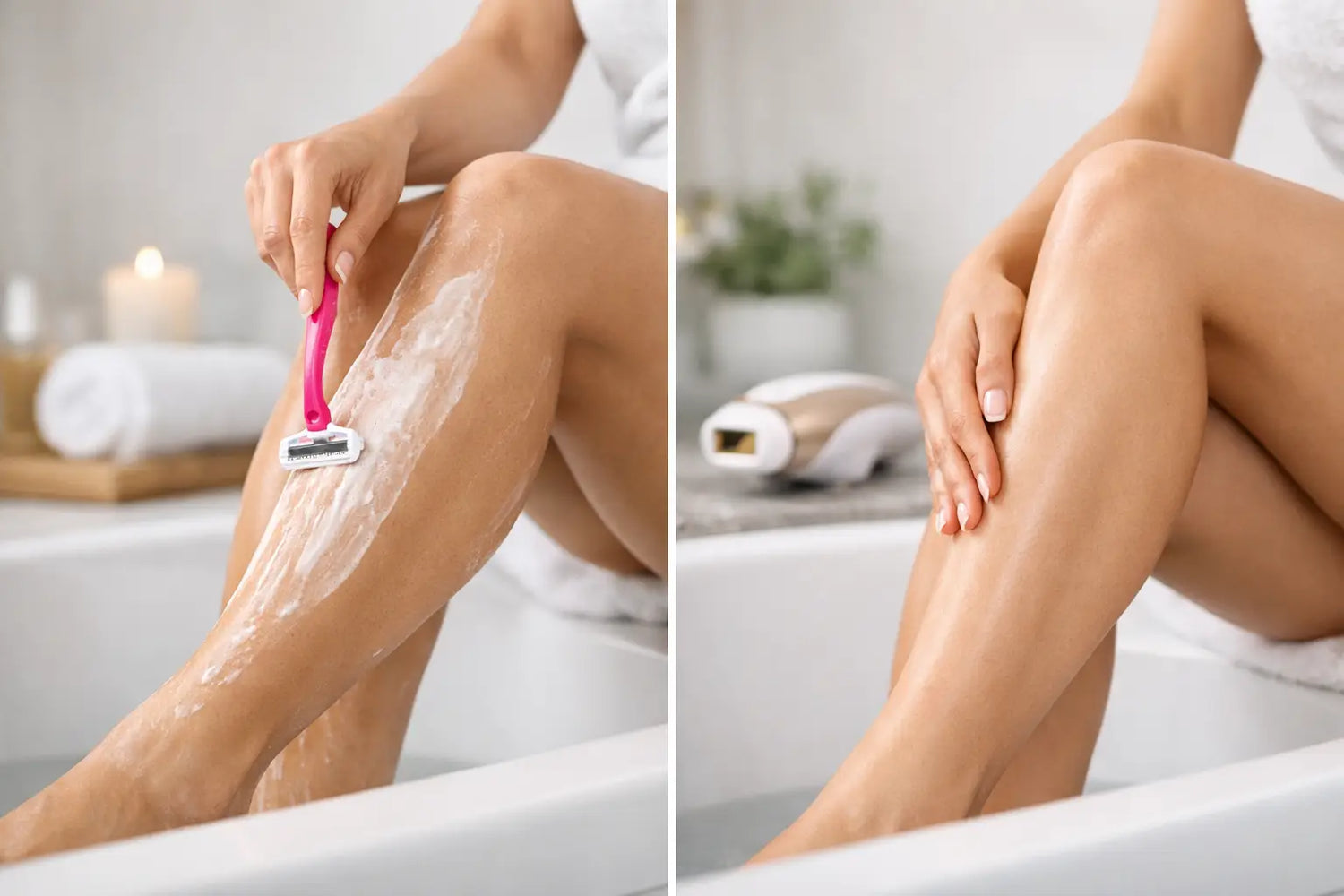
You can get smooth skin in five minutes with a razor. You can also end up dealing with stubble again by tomorrow. That is the real difference behind ipl vs shaving results - one gives you a fast surface fix, while the other is built for long-term hair reduction.
If you are tired of planning outfits around when you last shaved, this comparison matters. Shaving is familiar, cheap at first, and easy to fit into a rushed routine. IPL asks for more consistency upfront, but the payoff is less hair, slower regrowth, and a smoother feel that lasts longer between sessions.
IPL vs shaving results at a glance
The biggest difference is where each method works. Shaving cuts hair at the skin’s surface. IPL targets the hair at the root with pulses of light designed to reduce regrowth over time. That means shaving gives instant visible results, while IPL gives gradual results that build.
So if you want hair gone right now for tonight, shaving wins on speed. If you want to stop thinking about hair removal so often, IPL usually wins on long-term convenience.
This is why the comparison is not really about which one removes hair faster. It is about what kind of result you want after a week, after a month, and after a year.
What shaving results actually look like
Shaving is popular for a reason. It is quick, affordable to start, and easy to do at home. You glide the razor over the skin, rinse, and the hair is gone. For many women, that makes it the default option for legs, underarms, and bikini line.
But shaving only removes the part of the hair you can see. The follicle underneath stays active, which is why regrowth happens fast. Some people notice stubble within 24 hours. Others get a couple of days of smoothness, depending on hair thickness, growth speed, and the area being shaved.
There is also the texture issue. Freshly shaved skin can feel smooth at first, but as hair starts coming back, it often feels rough or prickly. That is especially frustrating in areas where hair is coarse, like underarms or bikini line.
Then there is maintenance. Shaving is not really one treatment. It is a repeating cycle. Razors need replacing, shaving cream runs out, and skin can get irritated from doing the same process over and over.
What IPL results actually look like
IPL stands for intense pulsed light. At-home IPL devices use light energy to target pigment in the hair and disrupt the growth cycle. You do not get the same instant hair-free result you get from shaving alone, because IPL works over a series of treatments.
That is the key expectation to set. IPL is not a one-session miracle. It is a process. In the early weeks, many people start noticing that hair grows back slower, looks finer, or comes in patchier. With consistent use, the goal is significant long-term reduction.
This is where IPL feels different in real life. Instead of constantly removing fully grown hair, you are working toward having less hair show up in the first place. That changes your routine. You spend less time shaving, less time checking for stubble, and less time dealing with the everyday upkeep that comes with razors.
For women who want smoother skin without daily or every-other-day maintenance, that is the result that matters most.
IPL vs shaving results for smoothness
If we are talking about immediate smoothness, shaving gives a faster first impression. The surface hair is gone right away, so skin can feel smooth as soon as you finish. The problem is how quickly that smoothness fades.
IPL tends to win on lasting smoothness. Once treatments begin reducing hair growth, there is simply less hair returning to the surface. That often means less shadow, less rough regrowth, and longer stretches where skin stays smoother with much less effort.
It depends on your hair type and consistency with treatment, but many women find that the skin experience itself improves with IPL. Less frequent shaving can also mean fewer nicks and less irritation from blades.
Regrowth is where the difference gets obvious
This is the category where ipl vs shaving results becomes much easier to judge.
With shaving, regrowth is expected almost immediately. The hair follicle was never addressed, so the cycle continues as usual. If your hair grows quickly, the result can feel short-lived and high maintenance.
With IPL, the goal is to interrupt that cycle. Hair does not just disappear permanently after one use, but regular sessions can reduce how much comes back and how fast it returns. Over time, many users see thinner regrowth and more bare patches, which means less dependence on any other hair removal method.
This is why IPL appeals to people who are done with repetitive grooming. It shifts the whole pattern instead of just cleaning up the surface.
What about ingrown hairs and irritation?
Shaving can be hard on sensitive skin. Razor burn, cuts, bumps, and ingrown hairs are common complaints, especially in areas with coarse hair or curves that are harder to shave cleanly. Even when you use good technique, repeated friction can leave skin feeling irritated.
IPL is not completely risk-free, but it often feels gentler in the long run because it can reduce how often you need to shave. That alone can make a visible difference if your skin reacts badly to razors.
Some people do experience mild warmth or temporary redness after IPL sessions, which is normal for many users. The trade-off is that this is usually part of a planned treatment schedule, not an irritation cycle that keeps repeating every few days.
Cost now versus cost later
Shaving looks cheaper because the upfront cost is low. A razor is inexpensive. So is a can of shaving cream. But the math changes when you add up years of replacement blades, creams, and the time you keep spending on maintenance.
IPL costs more at the beginning because you are buying a device, not a disposable tool. But if it works well for you and helps reduce your need to shave regularly, the long-term value can be much better. That is especially true for women who shave multiple areas several times a week.
This is where an at-home device becomes appealing. You get salon-inspired technology without booking appointments or paying clinic-level prices. For many shoppers, that is the sweet spot between results and affordability.
Who gets better results from IPL?
IPL is not equally effective for every skin tone and hair color combination, so this is one of the few areas where shaving is more universal. Razors can remove visible hair on almost anyone, even though the results are temporary.
IPL generally works best when there is a clear contrast between hair pigment and skin tone. Darker hair tends to respond better because the light targets pigment. Very light blonde, red, gray, or white hair may not respond as well.
That does not mean IPL is complicated. It just means expectations should be realistic. The right user can see a major difference. The wrong candidate may get limited results and feel disappointed if they expected the same outcome as someone with a more ideal hair and skin profile.
Which one fits a busy routine better?
At first glance, shaving seems easier because it is fast. But fast is not always convenient if you have to keep doing it nonstop.
IPL requires commitment at the start. You need to follow a treatment schedule and stay consistent. That part matters. If you are the kind of person who wants one quick fix and never wants to think about it again, shaving might feel simpler in the short term.
But if you are looking at your routine honestly, fewer future shaving sessions can be a huge upgrade. Many women would rather spend a little time now to avoid constant upkeep later. That is where an at-home IPL device, like the NOHA Device, fits naturally into a self-care routine built around freedom and long-term results.
The real answer: it depends on your goal
Choose shaving if you want immediate hair removal with no learning curve and minimal upfront cost. It is practical, quick, and fine for short-term needs.
Choose IPL if you want to reduce regrowth, cut down on constant shaving, and move toward smoother skin that lasts longer between touch-ups. It is a better fit for women who are tired of the cycle and want a more permanent-feeling solution at home.
The best choice is not about what sounds easiest today. It is about what will feel easier three months from now when you are either still reaching for a razor or barely thinking about hair removal at all.
Smooth skin should not feel like a full-time job. If you want a routine that gives back your time, the better long-term result is usually the one that keeps you from starting over every few days.


Leave a comment
This site is protected by hCaptcha and the hCaptcha Privacy Policy and Terms of Service apply.