

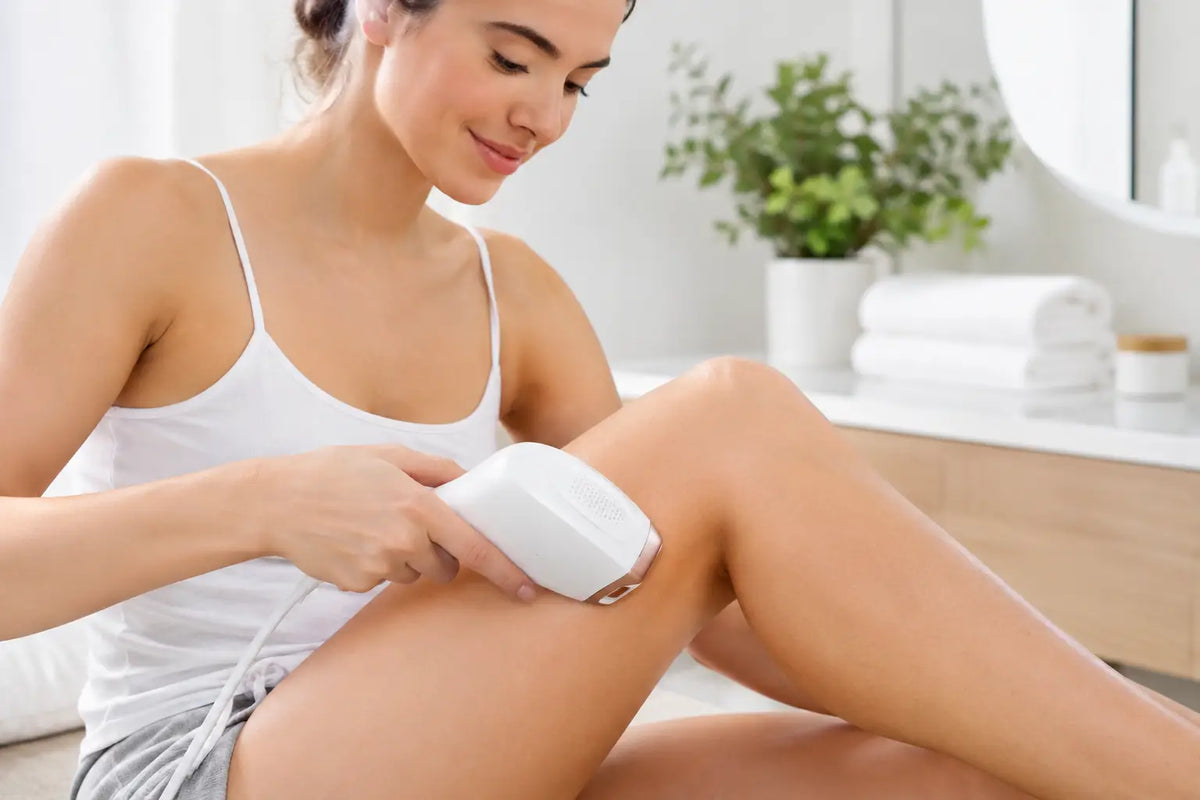
Shaving again when you just shaved yesterday is exactly why at-home IPL has become such a popular self-care upgrade. The best IPL features for beginners make the experience feel less like learning a complicated beauty tool and more like building a simple routine for smoother-looking skin over time.
Not every IPL device is designed with first-time users in mind. The features that matter most are the ones that help you feel confident, stay comfortable, and treat your skin consistently without booking salon appointments or stocking up on razors and wax strips.
Best IPL Features for Beginners: Start With Safety
IPL, or Intense Pulsed Light, uses broad-spectrum light to target pigment in the hair. With repeated treatments, it can help reduce visible hair growth. Because light-based hair removal works differently across skin tones and hair colors, a beginner-friendly device should help you understand whether treatment is appropriate before you start.
Skin tone sensors add peace of mind
A built-in skin tone sensor is one of the most helpful features for someone new to IPL. It checks the skin area before a flash and can prevent the device from firing if the area is not suitable for treatment. That is a meaningful extra layer of reassurance when you are treating yourself at home.
This feature does not replace reading the instructions. You should still confirm that your skin tone and natural hair color are compatible with the device. IPL generally works best when there is contrast between the hair and skin, such as darker hair on lighter to medium skin tones. It may not be effective on very light blonde, gray, red, or white hair, and it is not suitable for every skin tone.
Adjustable energy levels let you ease in
Your legs, underarms, bikini line, and upper lip do not all feel the same. Multiple intensity settings let you begin at a lower level, see how your skin responds, and gradually move up as appropriate. This is especially useful if you are nervous about discomfort or treating a more sensitive area.
Higher energy is not automatically better. The right setting is the highest level that feels tolerable and is appropriate for your skin. A good device makes changing levels quick and clear, rather than burying the controls behind a confusing sequence of buttons.
Look for a Fast Flash Rate
The biggest difference between an IPL device you use once and one you actually stick with is often speed. If a full leg treatment feels like it takes forever, it is easy to skip your next session. A fast flash rate helps you move efficiently across larger body areas, making consistent treatments far more realistic.
For beginners, this usually means looking for a device with a glide or continuous-flash mode. Instead of pressing the flash button for every single spot, you can hold the treatment window against the skin and move steadily along your leg or arm. It is a simple feature, but it turns a time-consuming task into something you can do while getting ready for bed or winding down after a shower.
For smaller areas, such as the underarms, bikini line, or face, a stamp mode gives you more control. You place the device, flash once, then reposition it carefully. The best setup includes both options: glide mode for speed and stamp mode for precision.
A Comfortable Treatment Window Makes a Real Difference
Beginners often focus on flash count or marketing claims first, but the design of the treatment window matters just as much. A larger window can cover legs and arms more quickly, while a smaller, well-shaped head can make it easier to reach curves, underarms, and the bikini area.
You do not need an oversized device that feels awkward in your hand. Look for something that is easy to grip, light enough to use for several minutes, and simple to position flat against the skin. Full contact matters because the device needs to sit securely before it flashes.
Some people notice warmth or a mild snapping sensation with IPL. That is why comfort-focused design and adjustable settings are worth prioritizing over a device that promises the most dramatic experience. If a treatment feels painful, stop and reassess the setting and your skin's suitability.
Clear Controls Beat Complicated Technology
At-home beauty should feel empowering, not technical. The best IPL features for beginners include an easy-to-read display, obvious power and intensity buttons, and clear treatment guidance. You should be able to tell which level you are using without guessing.
A straightforward device also helps you stay consistent. IPL is not a one-and-done treatment. Hair grows in cycles, and only hairs in the active growth phase respond to treatment. Most at-home plans involve weekly or biweekly sessions at the beginning, followed by occasional touch-ups as needed. Your exact schedule should always follow the device instructions.
If your device includes a treatment schedule or reminders, that can be useful, but it is not essential. A calendar on your phone works just as well. What matters is choosing a routine you can maintain. Five focused minutes for underarms is more valuable than an elaborate plan you abandon after two weeks.
Choose Features That Support Sensitive Areas
The bikini line and underarms are usually where beginners have the most questions. These areas may feel more sensitive, and their curves can make treating them a little more challenging. A device with several power settings, a dependable skin-contact sensor, and a compact head offers more control where you need it most.
Before treating any new area, do a patch test according to the product instructions. Wait the recommended amount of time to check for a reaction before moving forward with a full session. Avoid using IPL over tattoos, very dark spots, moles, open cuts, irritated skin, or areas with a recent sunburn.
You should also avoid treatment after recent tanning, whether from the sun, a tanning bed, or self-tanning products that darken the skin. Freshly tanned skin can increase the risk of irritation and may make treatment unsuitable. If you use retinoids, photosensitizing medications, or have a skin condition, check with a healthcare professional before beginning IPL.
Do Not Let Flash Count Make the Decision for You
You may see IPL devices promoted with hundreds of thousands or even millions of flashes. A high flash count can suggest long-term usability, especially if you plan to treat multiple body areas. But it should not be the only feature you compare.
A device with plenty of flashes but poor ergonomics, limited settings, or unclear safety guidance may not be the best choice for a first-time user. Think about your actual routine. Are you mainly treating underarms and bikini line? Do you want to work on legs too? Will you share the device with another person? Those answers make flash count more meaningful.
For many shoppers, an IPL device is appealing because it can replace the repeating cost of razors, shaving cream, wax appointments, and salon visits. The value grows when the device is easy enough to use consistently and suitable for the areas you want to treat.
The Simple Beginner Checklist
Before choosing an at-home IPL device, prioritize these essentials:
- A skin tone sensor or built-in safety check
- Multiple intensity levels for a gradual start
- Glide mode for legs and arms, plus stamp mode for precision
- A comfortable shape and treatment window for your target areas
- Clear instructions, realistic treatment timing, and simple controls
The right IPL device should not make you feel like you need a certification to use it. Choose one that fits your skin, hair, comfort level, and routine, then give yourself the consistency that lasting hair-reduction results require. Your future self may be very happy to spend less time reaching for a razor.

Leave a comment
This site is protected by hCaptcha and the hCaptcha Privacy Policy and Terms of Service apply.