

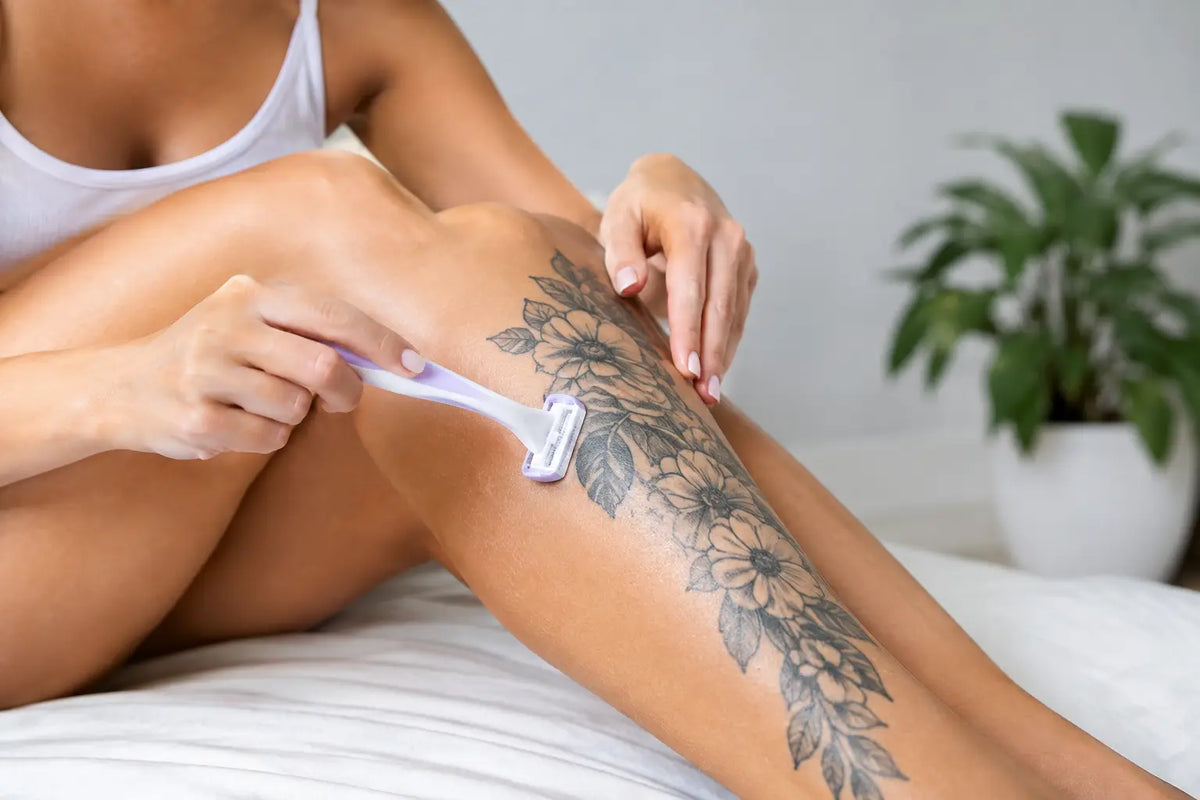
Fresh ink is an investment in your look, not an area to gamble with. This tattoo safe hair removal guide explains how to keep unwanted hair under control without putting your artwork, comfort, or skin at unnecessary risk. The short version is simple: never use IPL or laser flashes directly over a tattoo. You can still enjoy smooth skin around it with the right plan.
Why Tattoos and Light-Based Hair Removal Do Not Mix
IPL and laser hair removal work by sending light into pigment in the hair follicle. Tattoo ink is also pigment, often much darker and more concentrated than the surrounding skin. When light-based hair removal is used over tattooed skin, the ink may absorb that energy instead of letting it target the hair follicle.
That can lead to painful overheating, blistering, burns, fading, or changes to the tattoo’s appearance. Black, blue, red, and other colored inks can all react differently, so there is no reliable “safe” ink color for an IPL flash. Even a tattoo that has healed beautifully for years should be treated as a no-flash zone.
This is not a reason to give up on low-maintenance hair removal. It is a reason to be precise. Treat the clear skin around the tattoo and choose a different method for hair that grows directly on the ink.
Tattoo Safe Hair Removal Guide: Start With the Tattoo’s Age
A new tattoo needs time to become fully healed before you do anything beyond the aftercare instructions from your tattoo artist. During healing, the skin barrier is compromised, and friction, heat, exfoliation, waxing, or harsh products can interfere with recovery.
Wait until peeling, scabbing, redness, tenderness, and shine are completely gone. That usually takes several weeks, but healing is personal. If the tattoo still feels irritated, tight, raised, or itchy, it is not ready for hair removal treatments. Ask your tattoo artist or a dermatologist if you are unsure.
Once the tattoo is fully healed, gentle shaving or trimming can usually be used on top of the tattoo. IPL, at-home laser devices, and professional laser hair removal are different. Keep the treatment window off the ink every time, not only during the first few months.
What You Can Use Directly Over a Healed Tattoo
For hair growing on a fully healed tattoo, a clean razor or electric trimmer is usually the most practical choice. Shaving removes hair at the skin’s surface without using light or heat, making it the go-to option when you want to protect your ink.
Use a fresh, clean blade and a gentle shaving product. Shave with light pressure, rinse with cool or lukewarm water, then apply a fragrance-free moisturizer if your skin tolerates it. Do not shave over bumps, cuts, active breakouts, sunburn, or a tattoo that feels inflamed.
An electric trimmer can be even easier for areas where you want less skin contact. It may not give the ultra-close finish of a razor, but it is quick, convenient, and less likely to create irritation from repeated passes.
Waxing, sugaring, and epilating may be options only after the tattoo is completely healed, but they are not automatically the best choice. These methods pull at the skin and can cause redness, ingrown hairs, or irritation. If you are prone to sensitivity or your tattooed area is delicate, shaving or trimming is the smarter, lower-drama move.
How to Use IPL Around Tattoos
At-home IPL can still fit your routine if the tattoo is inside a larger treatment area, such as a leg, arm, bikini line, or underarm. The goal is to treat bare, eligible skin around the tattoo while leaving a clear buffer over the artwork.
First, read your device instructions. Every IPL device has its own safety guidance, skin-tone range, and treatment-area rules. The NOHA Device™ is designed to make at-home hair removal feel easier, but like any IPL device, it should not be flashed directly over tattoos, dark spots, or very dark pigmented areas.
Before treatment, shave the clear skin you plan to treat. Do not wax or pluck that hair, because IPL needs the follicle beneath the skin to respond. Then map out the tattoo boundary in good lighting. Leave enough untreated space that you can place the device flat on clear skin without its flash window touching or overlapping the tattoo.
A common mistake is assuming you can simply cover the tattoo with a towel, bandage, or makeup and flash right beside it. Do not rely on a cover as permission to treat the tattooed area. Light can scatter, and a cover may shift or fail to block enough energy. Follow the manufacturer’s spacing instructions, and when in doubt, leave more room.
For a small tattoo in the middle of an otherwise hair-bearing area, treat the surrounding skin in sections rather than rushing across it. Skip any spot where the tattoo reaches the edge of the treatment window. Missing a small strip of hair is far better than risking a burn or damaged ink.
A Simple Pre-Treatment Routine
Good results start with calm, clean skin. On your IPL day, shave the treatment area, cleanse away lotion, deodorant, perfume, and self-tanner, and make sure the skin is dry. Keep the tattoo itself out of the treatment path.
Do a patch test on a small section of clear, non-tattooed skin according to the device instructions, especially if you are new to IPL or have recently changed your routine. Give your skin time to respond before completing a larger session.
Skip IPL on skin that is sunburned, newly tanned, irritated, or healing from another cosmetic treatment. Be extra cautious if you use prescription skin treatments or medications that increase light sensitivity. A dermatologist or prescribing clinician can help you decide whether light-based hair removal is appropriate for you.
When Professional Help Makes More Sense
At-home IPL is a convenient option for many people, but it depends on the placement of your tattoo. If ink covers most of the area you want to make hair-free, at-home treatment may leave too much untreated skin to feel worthwhile.
A licensed laser professional may be able to create a careful treatment plan around the tattoo, particularly for larger areas. Still, they will generally avoid firing directly over the ink. Professional care does not change the basic rule. It can offer more precision and guidance, not a shortcut through a tattoo.
Electrolysis is another conversation worth having for isolated hairs in hard-to-treat spots because it targets follicles one at a time instead of using broad light energy. Whether it is suitable over or near tattooed skin depends on the tattoo, your skin, and the provider’s protocol. Choose a qualified professional and ask directly about tattoo safety before booking.
Common Mistakes That Can Put Your Ink at Risk
The biggest risk is treating a tattoo as if it were simply darker skin. It is not. A tattoo contains concentrated pigment beneath the surface, which is exactly why light-based devices require caution.
Avoid these four shortcuts:
- Flashing IPL or laser directly over any part of a tattoo, even if it is old, faded, or tiny.
- Treating a fresh tattoo before it has fully healed.
- Using IPL over dark moles, beauty marks, or heavily pigmented spots without following device guidance.
- Waxing or exfoliating aggressively when the tattooed skin is irritated, peeling, or sun-exposed.
Smooth Skin Without Compromising Your Artwork
Your tattoo does not have to stand between you and a simpler hair removal routine. Use shaving or trimming directly over fully healed ink, keep IPL strictly on the clear skin around it, and give yourself extra space whenever the tattoo sits near your treatment zone.
The best routine is not the one that treats every inch. It is the one that gives you smoother skin while keeping the art you chose looking exactly the way you want it to look.



Deja un comentario
Este sitio está protegido por hCaptcha y se aplican la Política de privacidad de hCaptcha y los Términos del servicio.