

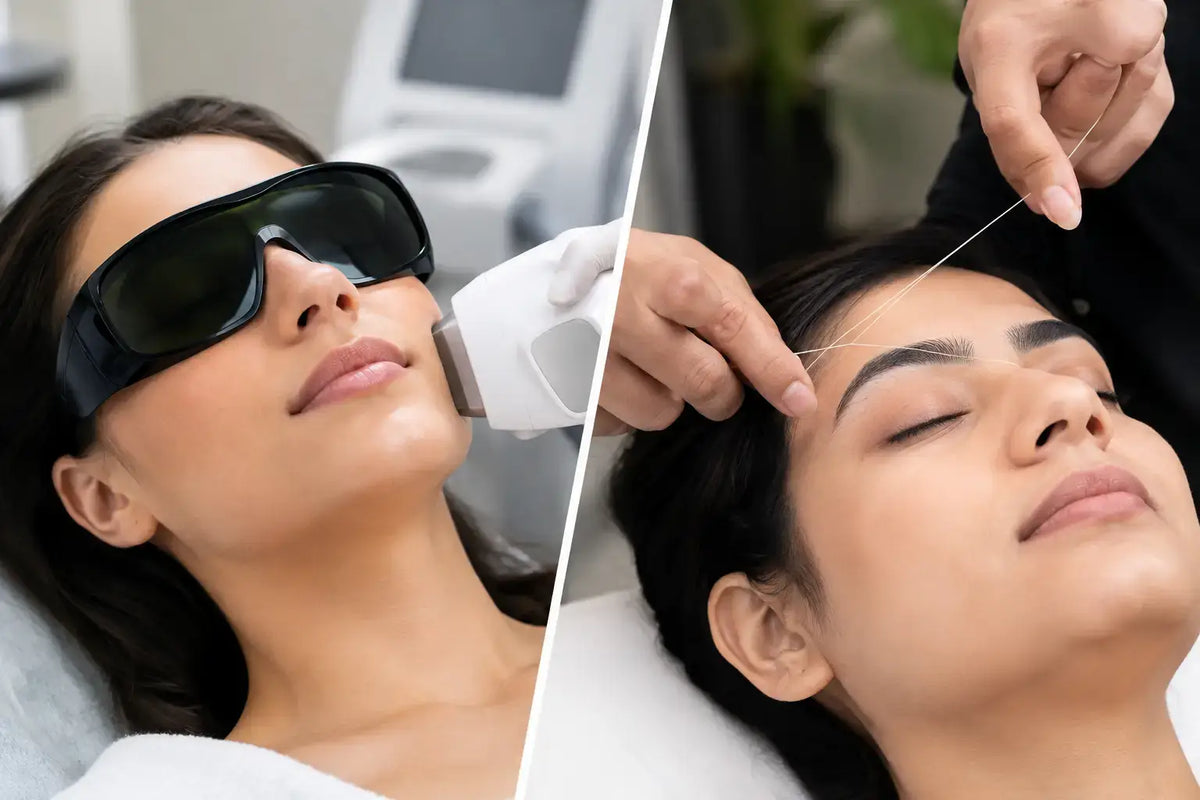
That five o’clock shadow on your upper lip, the brow appointment you keep rescheduling, the razor you reach for again two days later - hair removal can quietly take over your routine. When comparing IPL versus threading, the real question is not which method is universally better. It is which one gives you the smooth-skin results you want with the least effort, discomfort, and ongoing expense.
Threading is known for sharp, polished brows and detailed facial hair removal. IPL is built for a different kind of freedom: reducing visible hair growth over time so you can spend less time managing it. Both have a place in a beauty routine, but they solve very different problems.
IPL Versus Threading: The Core Difference
Threading removes hair from the root using twisted cotton thread. A skilled technician can catch even fine facial hairs and create highly defined brow lines. The result is immediate, which makes threading a popular choice before a vacation, event, or photo day. But the follicle remains active, so hair grows back and the appointment cycle starts again.
IPL, short for intense pulsed light, uses gentle pulses of light to target pigment in the hair. With consistent treatments, that energy helps disrupt the hair-growth cycle, leading to less visible regrowth over time. It is not a one-session fix, and it does require consistency. The reward is a lower-maintenance routine instead of another appointment every few weeks.
Think of threading as detailed hair removal for right now. Think of IPL as a long-term strategy for the areas you are tired of shaving, waxing, or booking around.
Where Threading Wins
Threading is hard to beat when precision is the priority. Eyebrows are the clearest example. A threader can shape an arch, clean up between brows, and remove a few stray hairs without affecting the rest of your brow. IPL is not intended to sculpt brow shape, especially near the eye area, where light-based devices should not be used.
It can also be a practical choice for someone who wants immediate facial hair removal. If you have an event tomorrow and want a smooth upper lip today, threading delivers a fast visible result. There is no treatment schedule to follow and no waiting period for hair reduction to build.
The trade-off is upkeep. Most people need threading again within two to four weeks, depending on their natural growth rate. The small cost of each appointment can feel manageable, but over a year of brow and upper-lip visits, it adds up. There is also the discomfort factor. Threading is quick, but many people feel pinching, watering eyes, temporary redness, or sensitivity afterward.
Where IPL Changes the Routine
IPL is designed for larger areas and repeat treatment, which is why it can be such a smart upgrade from shaving or waxing. Legs, underarms, bikini lines, arms, and the lower face are common areas people want to treat because they demand so much repeated attention.
The biggest benefit is not just smoother skin after one session. It is the possibility of needing less hair removal over time. As regrowth becomes finer, slower, or less noticeable, you may shave less often and stop planning your week around salon appointments. For anyone who has ever packed a razor “just in case,” that kind of freedom matters.
At-home IPL also puts treatment on your schedule. You can treat in privacy, skip the commute, and avoid paying per area at a clinic or salon. A device such as the NOHA Device brings salon-inspired IPL technology into your own routine, making consistent sessions far more realistic for busy beauty lovers.
IPL does ask for patience. Treatments are usually done on a regular schedule at the beginning because hair grows in cycles, and light treatment is most effective when hairs are in the active growth phase. You will not get perfectly hair-free skin overnight. What you can get is a plan that works toward fewer grooming days ahead.
Comfort: What Does Each Method Feel Like?
Neither option feels exactly like nothing, but the sensation is very different. Threading feels like a rapid series of tiny pulls as hairs are lifted from the root. Delicate areas, including the upper lip and brows, may feel more intense. Skin can look pink afterward, particularly if you are sensitive or use active skincare ingredients.
At-home IPL is often described as a warm flash or a light snap against the skin. Sensation varies by body area, hair density, and your personal comfort level. Many users find it more manageable than waxing because there is no strip pulling a large section of hair out at once. Start at a comfortable intensity, follow your device instructions, and work your way up only if your skin tolerates it well.
Preparation makes a difference with IPL. Shave the treatment area so the light can focus below the surface instead of singeing hair above it. Use clean, dry skin without lotions, deodorant, or fragrance. With threading, arrive with skin that is clean and calm, and avoid aggressive exfoliation or retinoids right before your appointment if your skin is prone to irritation.
Cost: The Appointment Habit Versus the At-Home Investment
Threading can look cheaper because you pay a smaller amount at a time. Yet recurring services have a way of becoming invisible spending. A $20 to $40 facial threading visit, plus tip, repeated every few weeks can become hundreds of dollars a year. Add waxing, shaving supplies, or other areas, and your grooming budget can climb quickly.
IPL has a higher upfront cost, but it is built around long-term value. Instead of purchasing every appointment separately, you own the tool and can treat multiple eligible areas from home. For someone focused on underarms, legs, bikini line, or recurring facial hair, that math may make far more sense than years of salon visits.
There is no one-size-fits-all answer. If you only thread your brows every month and love your shape, it may remain your best beauty appointment. If you are constantly shaving several body areas or booking hair removal services, IPL can be the more cost-conscious move over time.
Can You Use IPL and Threading Together?
Yes, with clear boundaries. Many people keep threading for brow shaping while using IPL on areas where they want long-term hair reduction, such as underarms, legs, arms, bikini line, chin, or upper lip when their device instructions permit it. This approach gives you precise brows and a lower-maintenance routine everywhere else.
Do not thread, wax, or pluck an area you plan to treat with IPL during your treatment course. IPL needs the hair root present to target the follicle. Shaving is generally the preferred way to remove surface hair between sessions because it leaves the follicle in place. Always follow the specific instructions for your device.
Timing also matters after threading. Let redness or irritation fully settle before applying light-based treatment to the same area. If your skin feels tender, looks inflamed, or has any broken skin, wait until it has recovered.
Is IPL Right for Your Skin and Hair?
IPL is usually most effective when there is noticeable contrast between darker hair and lighter skin because the light targets pigment in the hair. At-home devices have different skin-tone and hair-color compatibility guidelines, so checking the manufacturer’s chart is essential before you buy or treat. Very light blond, gray, white, or red hair may not respond well because it contains less pigment.
Safety matters more than rushing into a treatment. Do a patch test, wear any required protective eyewear, and never use IPL close to the eyes. Avoid treatment on tattoos, very dark spots, irritated skin, or areas affected by a condition that makes your skin sensitive to light. If you are pregnant, taking photosensitizing medication, using prescription acne treatments, or have a skin concern, ask a qualified healthcare professional before starting.
Choose the Method That Gives You More Freedom
Choose threading when you want immediate facial cleanup, detailed brow shaping, or a one-time polished result. Choose IPL when you are ready to break the repetitive shave-wax-book-repeat cycle and work toward less visible hair growth from home. For plenty of women, the best answer is both: threading for brows, IPL for the areas that take up the most time.
Your hair removal routine should fit your life, not create another standing appointment you have to remember. Start with the areas that frustrate you most, stay consistent, and give your skin the kind of low-maintenance smoothness that makes getting ready feel easier.


Deja un comentario
Este sitio está protegido por hCaptcha y se aplican la Política de privacidad de hCaptcha y los Términos del servicio.