

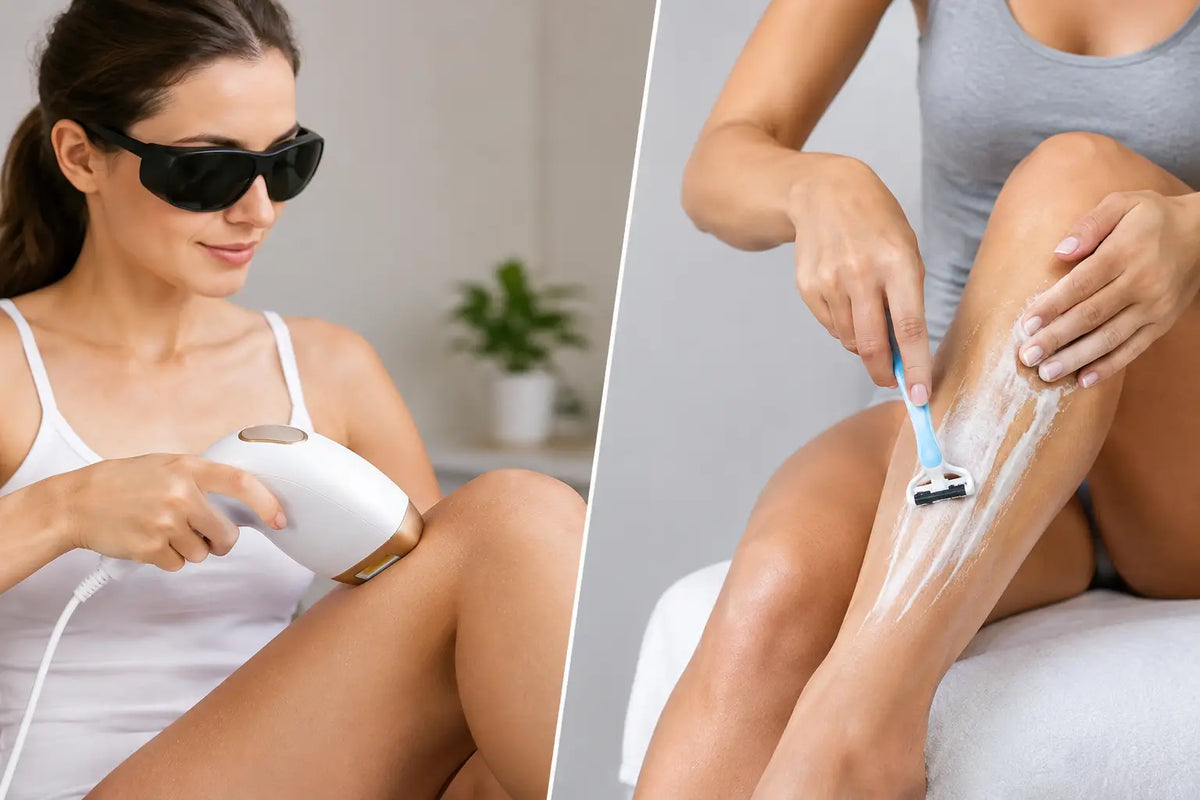
Your shower is running late, your razor is dull, and you are trying to get smooth legs before leaving the house. That familiar rush is exactly why the IPL versus shaving question matters. Both can leave skin feeling smooth, but they create very different routines. One handles the hair you can see today. The other is designed to help reduce future regrowth over time.
For anyone tired of buying replacement blades, dealing with stubble the next morning, or planning outfits around shaving days, at-home IPL can feel like a major upgrade. Still, shaving has its place. The better choice depends on what you want from your hair removal routine, how consistent you can be, and whether IPL is a fit for your skin tone and hair color.
IPL versus shaving: the real difference
Shaving is immediate surface-level hair removal. A razor cuts the hair at or just above the skin, which is why your skin can feel smooth right away. It is quick, familiar, and inexpensive at the start. The catch is that hair keeps growing, so the smooth feeling is usually short-lived.
IPL, short for intense pulsed light, works differently. It uses pulses of light that target pigment in the hair. The light converts to heat at the follicle, helping disrupt the growth cycle over repeated treatments. IPL does not pull hair out during a session, and it does not create instant hair-free skin the way a fresh shave can. Its advantage is the long game: less visible regrowth and less frequent need for hair removal when used consistently.
Think of shaving as a quick reset and IPL as a routine built for lower maintenance. A great at-home IPL device lets you treat on your own schedule, without booking appointments or making salon visits part of your month.
Results: immediate smoothness or fewer shaving days?
If you need smooth underarms for tonight or want to wear shorts this weekend, shaving wins for immediate results. You can shave in minutes, rinse, moisturize, and go. That speed is hard to beat for a last-minute plan.
But immediate does not always mean convenient. Depending on your natural growth rate and the area you shave, you may notice stubble within a day or two. Areas with coarse hair, such as underarms, bikini lines, and lower legs, can become a repeating cycle of shave, regrowth, and shave again.
IPL requires patience at first. Most people begin with regular sessions for several weeks because hair grows in cycles and IPL works best when it can target hairs in the active growth phase. As treatment progresses, many users notice that hair grows back more slowly, appears finer, or becomes less dense. Follow the schedule in your device instructions, then move into maintenance as needed.
That is the core trade-off. Shaving delivers a fast cosmetic result. IPL asks for consistency upfront in exchange for the possibility of smoother skin with far less ongoing effort.
Comfort and skin feel
A well-used razor can be comfortable, but regular shaving can be rough on sensitive skin. Razor burn, nicks, dryness, itchy regrowth, and ingrown hairs can turn a simple shower step into something you dread. Repeated passes over the same spot can be especially frustrating around the bikini line and underarms.
IPL treatments feel different from person to person. Many describe the sensation as a quick warm snap or light flick. It is not the same as waxing, which removes hair by pulling it from the root. At-home IPL is designed for convenient, manageable treatments, and devices with adjustable intensity levels can help you begin at a setting that feels comfortable for you.
Preparation matters for both methods. For IPL, shave the treatment area first so the light can focus below the skin rather than singeing hair above it. Start with clean, dry skin, skip fragranced products or deodorant on the area before treatment, and use the device only as directed. For shaving, use a clean, sharp blade and enough slip from shaving cream or gel to avoid dragging the razor across dry skin.
Neither option is completely maintenance-free for every person. But if irritation from frequent blade contact is your biggest issue, IPL may help you reduce how often you need to shave over time.
Cost: cheap today versus value over time
A disposable razor seems inexpensive until you add up the years. Blades, handles, shaving creams, exfoliants, and products for bumps or irritation can become a regular beauty expense. The cost is spread out, which makes it easy to overlook, but it does not stop as long as you keep shaving.
An at-home IPL device costs more at the beginning. That is the honest part. Yet it can be a smart value for someone who wants to replace frequent grooming with a device they can use again and again. Compared with recurring waxing appointments or professional laser sessions, at-home IPL can offer professional-style technology without the repeated appointment costs.
The best value comes from using the device consistently. Buying IPL with the expectation of a one-time treatment is not realistic. Buying it because you want to spend less time shaving month after month is a much stronger reason.
How much time does each option take?
Shaving a small area can be fast. Shaving legs, underarms, bikini line, and other areas regularly is another story. Add shower time, cleanup, changing blades, and treating irritation, and those few minutes start to add up.
IPL sessions take more time than one quick shave at the beginning, especially if you are treating larger areas. But sessions are done less often as you move through your plan. Many people like being able to treat at home while fitting it around their own schedule, whether that is a quiet evening or part of a weekly self-care routine.
The goal is not to pretend IPL requires no effort. It does. The difference is where the effort goes. Shaving asks for frequent, ongoing attention. IPL concentrates more of that attention early on, with the aim of giving you more freedom later.
Who is a good candidate for IPL?
IPL works by targeting pigment, so it tends to work best on naturally dark hair against lighter to medium skin tones. Very light blonde, gray, white, and red hair may not respond well because there is less pigment for the light to target. IPL may also be unsuitable for some deeper skin tones, depending on the device and its approved skin-tone range.
Always check your device instructions and skin-tone guidance before treating any area. Do a patch test first, avoid use on tattoos, moles, or irritated skin, and protect recently treated skin from sun exposure. If you are pregnant, taking photosensitizing medication, managing a skin condition, or have concerns about treatment, ask a qualified healthcare professional before use.
Shaving is more universally available, but it is not automatically better for sensitive skin. If you regularly get cuts, ingrowns, or persistent redness, changing your method may be worth considering.
Can you shave while using IPL?
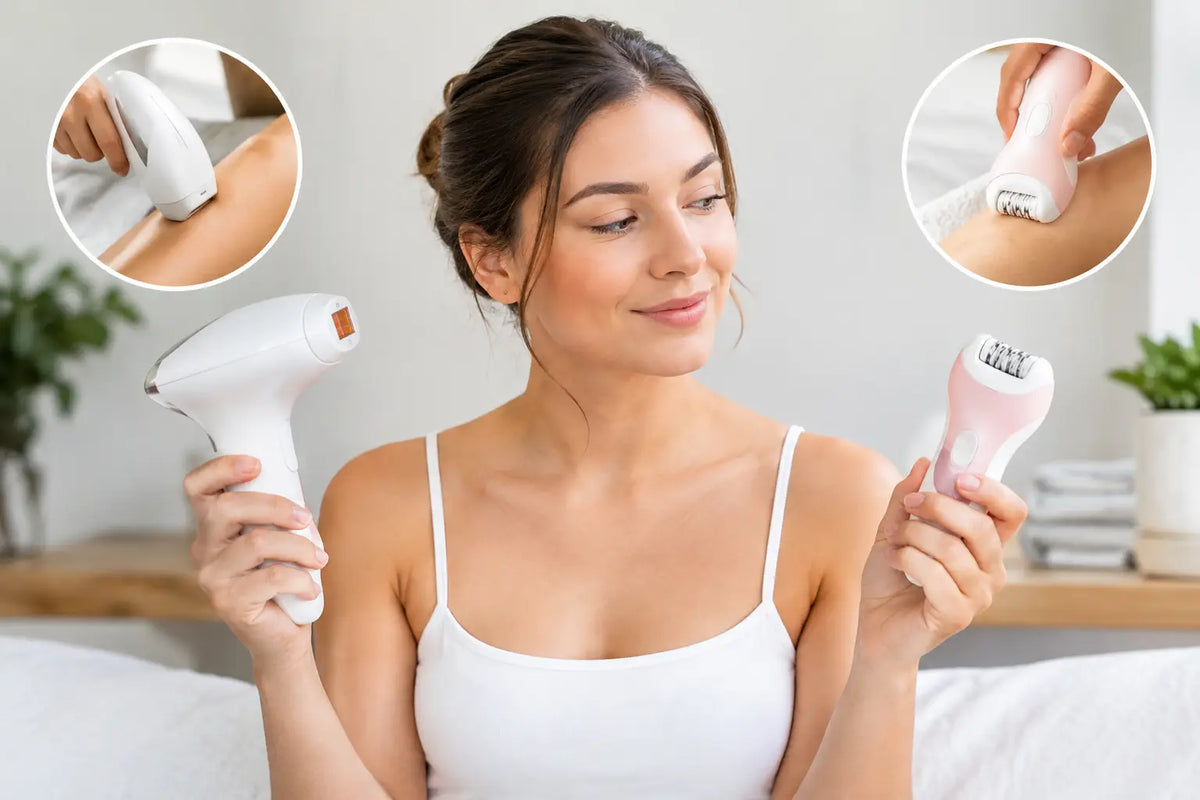
Yes. In fact, shaving is usually part of an IPL routine. Shave before your treatment session, rather than waxing, plucking, or epilating. IPL needs the hair follicle in place beneath the skin to do its job. Removing the hair from the root can make the treatment less effective.
Between sessions, shave only when you need to. As hair growth begins to slow, you may find that your razor becomes a backup instead of a daily essential. That shift is where IPL can feel especially satisfying: smooth skin stops depending on a rushed shower and a fresh blade.
Choose the routine that gives you more freedom
Choose shaving if you need immediate smoothness, want the lowest upfront cost, or are not a match for IPL based on your skin tone and hair color. Choose at-home IPL if you are ready to follow a treatment plan and want fewer shaving days, less repetitive grooming, and long-term value.
For women who are over the constant stubble cycle, a device like the NOHA Device™ makes the at-home option feel simple: treat consistently, let results build, and enjoy the time you get back. Smooth skin should feel like part of your life, not another appointment on your calendar.

Leave a comment
This site is protected by hCaptcha and the hCaptcha Privacy Policy and Terms of Service apply.