

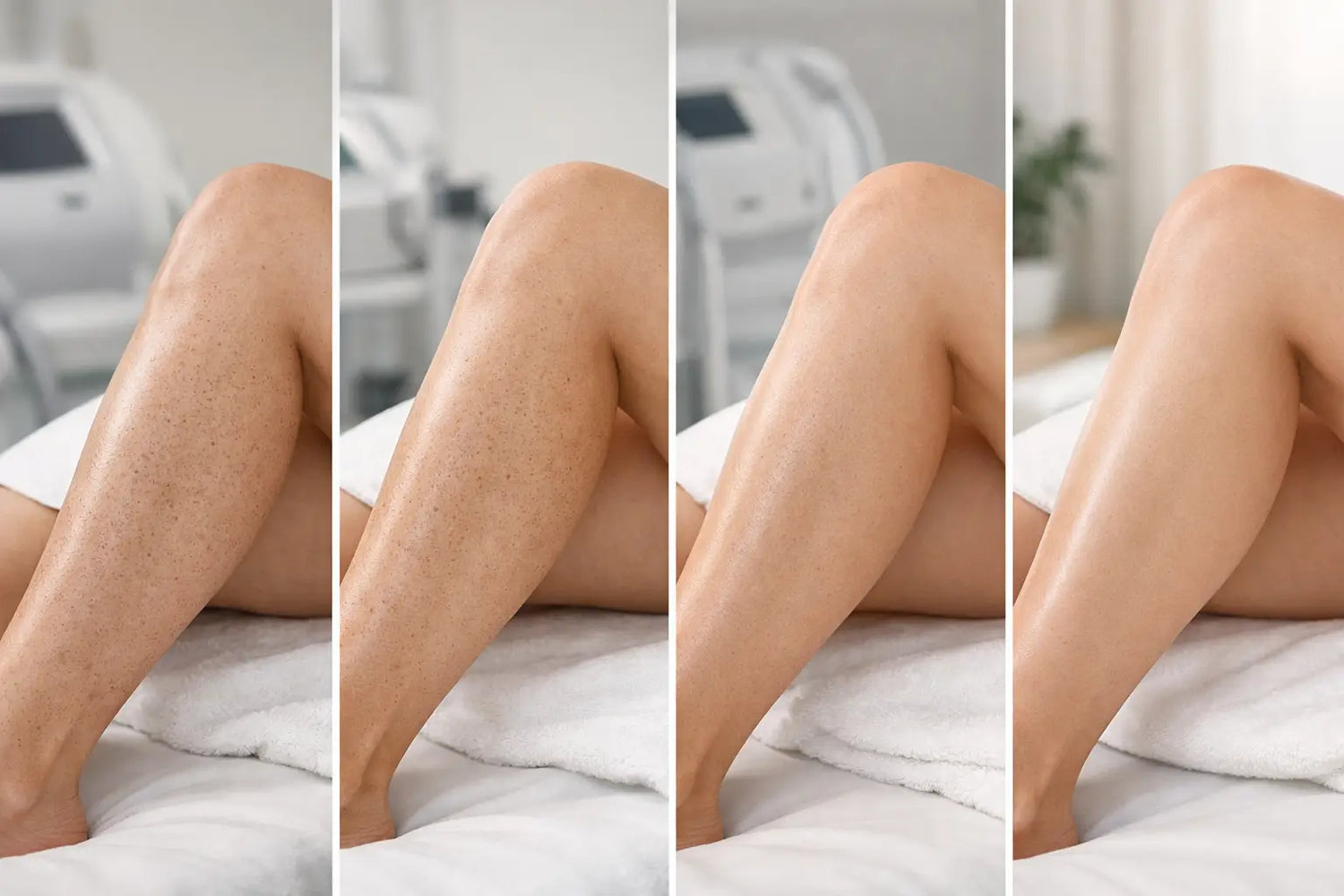
The best IPL leg treatment results example is not a pair of perfectly hair-free legs after one session. It is the moment you realize shaving no longer runs your schedule: regrowth is slower, patches are thinner, and smooth-leg days last longer without a razor in the shower.
IPL can make that shift possible at home, but results come from consistency, proper timing, and realistic expectations. If you are tired of waxing appointments, prickly stubble, and buying replacement razors, this is what a typical leg IPL journey can look like.
IPL Leg Treatment Results Example: What to Expect
IPL, or intense pulsed light, works by sending gentle flashes of light toward pigment in the hair. The light converts to heat at the root, helping interrupt the hair growth cycle over repeated treatments. Since every hair is at a different stage of growth, one session cannot target every strand effectively. That is why a routine matters more than one intense treatment.
Here is a realistic example for someone with naturally dark leg hair and light to medium skin who treats both legs regularly according to her device instructions.
Weeks 1-2: The routine begins
At the start, legs will usually look much the same. You shave before treatment so the device can focus its energy below the skin instead of singeing hair above it. After the first session, some people notice a mild warm feeling or temporary pinkness, but treatment should be comfortable and manageable.
Do not judge your results yet. Hair often still grows as it normally would during these first days. The win is getting started with a routine that takes place in your own bathroom, on your own time.
Weeks 3-4: Regrowth may start changing
By the third or fourth treatment, the first changes can become easier to spot. Some hairs may seem to grow in more slowly. Others can look finer or appear less dense in certain areas, such as the lower legs.
This stage can feel uneven, and that is normal. Your knees, ankles, and the backs of your legs may respond differently than your calves. Hair density, hormone changes, and how carefully you cover each area all play a part. Take a photo in similar lighting before you start and again every two weeks. It is much easier to notice gradual progress side by side than by checking your legs every morning.
Weeks 5-8: Fewer shaving days
This is where many users begin seeing the practical payoff. A typical IPL leg treatment results example at this point might look like shaving once a week instead of every day or two. Regrowth may come in patchier, and some areas may stay smooth for longer.
The goal is not to chase every single hair after every treatment. Keep following the recommended schedule, cover the full treatment area methodically, and avoid doubling up on flashes in one spot just because you want faster change. More is not always better for your skin.
Weeks 9-12: Noticeably lower maintenance
After a consistent initial treatment course, many people move into a maintenance rhythm. In a favorable outcome, the legs look smoother between sessions, with less visible regrowth and less need to plan outfits around shaving or waxing.
That does not mean every person gets identical results. IPL is designed to reduce hair growth over time, and maintenance sessions help sustain that reduction. Your individual timeline depends on your hair color, skin tone, hair growth cycle, device settings, and consistency.
Why Leg Results Can Look Different From One Area to Another
Legs are a large treatment area, so technique matters. It is easy to miss a strip near the shin or move too quickly around the knee. Divide each leg into sections: lower leg, knee, upper leg, and the back of the leg if you are treating there. Work in a steady pattern so you know where you have already treated.
Hair can also vary across the leg. Coarser, darker hair may respond more visibly than very fine or light hair because IPL relies on contrast between the hair pigment and surrounding skin. Blonde, gray, white, and red hair often do not respond as well to IPL. Very deep skin tones may also be unsuitable for certain IPL devices, so always check the device's skin-tone compatibility guide before starting.
Hormones are another real factor. Conditions and life stages that affect hormones can encourage new growth or make hair reduction feel less predictable. IPL can still fit into a low-maintenance beauty routine for many people, but it may require ongoing touch-ups rather than a one-and-done approach.
How to Get Better Results From At-Home IPL on Legs
Great results are built on small habits. Shave the area first, then cleanse and dry the skin. Skip lotion, body oil, self-tanner, and deodorant on the treatment area before your session. These can interfere with contact or make skin more sensitive.
Start at a comfortable energy setting and follow your device's instructions on when to increase it. You want a treatment that feels manageable, not a session you dread. At-home IPL is meant to fit your life, whether you treat your legs while catching up on a show or set aside a short self-care window after a shower.
Sun exposure deserves attention. Avoid treating freshly tanned, sunburned, or irritated skin. A tan changes the amount of pigment in the skin and can increase sensitivity. Protect treated legs from sun exposure with clothing or broad-spectrum sunscreen, especially if you live somewhere sunny year-round, including Puerto Rico.
For the first phase, stay on schedule. Missing a session occasionally does not erase all progress, but treating at random makes it harder to target hairs during active growth. Once you have achieved the level of reduction you want, switch to touch-up sessions as recommended.
What “Good” IPL Leg Results Really Mean
A good result is personal. For one person, it means swapping daily shaving for a quick weekly touch-up. For another, it means fewer ingrown hairs, less irritation from waxing, and the confidence to wear shorts without last-minute grooming.
The strongest before-and-after story is usually not about perfection. It is about freedom from the constant cycle of grow, shave, regret, repeat. That is why a device such as the NOHA Device can be a smart beauty investment: it brings salon-inspired IPL technology home, without building your calendar around appointments.
Be wary of any result photo that does not explain timing. A photo taken right after shaving can make any legs look smooth, even before IPL has had time to work. Better evidence shows the same person after a similar number of days without shaving, photographed in comparable lighting. Look for honest markers: how often she shaves, whether growth is patchier, and how many weeks she has treated consistently.
When to Pause and Ask a Professional
Do not treat over open cuts, active irritation, suspicious skin changes, tattoos, or areas with a rash. If you use medications that increase light sensitivity, have a skin condition, are pregnant or breastfeeding, or are unsure whether IPL is right for you, ask a qualified healthcare professional before beginning.
A patch test is also worth the few extra minutes. Treat a small area first, wait as directed by the device instructions, and check how your skin responds. Smooth skin is the goal, but healthy skin comes first.
Your IPL leg journey may begin with a little patience, but it can end with a routine that feels far lighter. Stay consistent, track the changes you cannot see day to day, and let each less-frequent shave be proof that your time is becoming your own again.


Leave a comment
This site is protected by hCaptcha and the hCaptcha Privacy Policy and Terms of Service apply.