

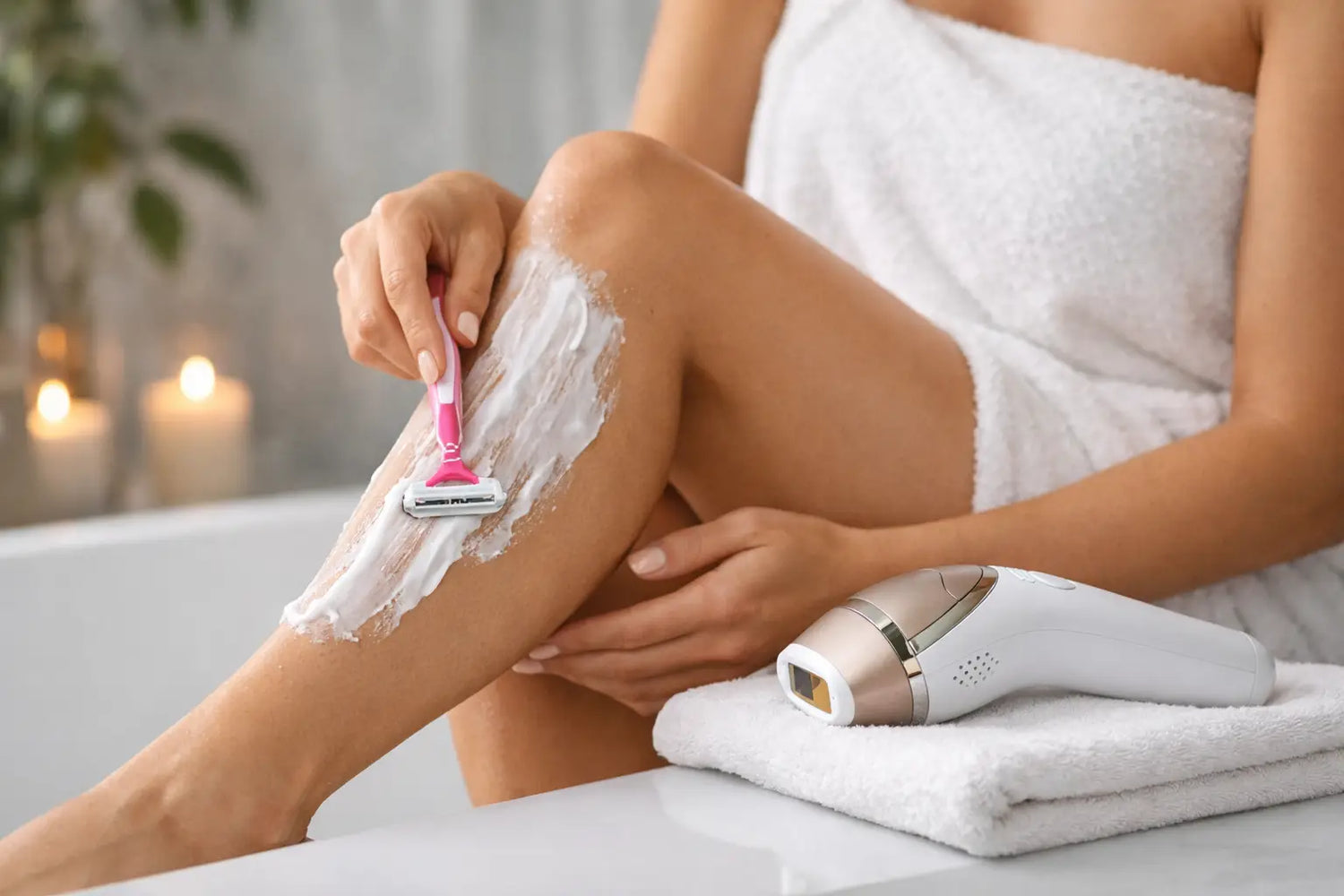
If you want better IPL results, your shave matters more than most people think. Knowing how to shave before IPL can mean the difference between a smooth, comfortable session and skin that feels irritated, patchy, or overly sensitive afterward.
IPL works best when the hair is still inside the follicle but not sitting above the skin. That is why shaving is the prep step that matters. You are removing surface hair so the light can target the follicle more directly, without wasting energy on hair above the skin.
Why shaving before IPL matters
When hair is left long, the light can singe the hair above the skin instead of focusing where you actually want it. That can create extra heat, a burnt-hair smell, and more discomfort during treatment. It also makes the session less efficient.
Shaving gives you the best setup for smoother, more targeted treatments. It helps the device glide better, keeps the treatment area cleaner, and reduces the chance of unnecessary surface irritation. If you are using an at-home device because you want a faster, lower-maintenance routine, this step is what helps keep the process simple.
There is also a common mix-up here. A lot of people assume waxing, epilating, or tweezing before IPL will help because the skin feels extra smooth. It is actually the opposite. IPL needs the root in place to work, so pulling the hair out removes the target.
How to shave before IPL
The best approach is a close, gentle shave about 12 to 24 hours before your session. That timing works well for most people because it removes visible hair while giving the skin a little time to settle. If your skin is very sensitive, shaving the day before often feels better than shaving immediately before treatment.
Start with clean skin. If you are shaving in the shower, let the area soften for a few minutes first. Use a fresh razor if possible, especially if you are shaving larger areas like legs or underarms. A dull blade can drag across the skin and create tiny nicks or irritation that make IPL less comfortable.
Use a simple shaving gel or cream if your skin tends to get dry or reactive. Then shave in slow, even strokes. You do not need to press hard. The goal is to remove hair at the surface, not scrape the skin. After shaving, rinse the area well and pat dry instead of rubbing.
If you are planning to treat the same day, make sure the skin is completely dry and calm first. Avoid applying heavy lotions, oils, deodorant, or fragranced products right before treatment unless your device instructions specifically say otherwise. Clean, product-free skin is usually the safest choice.
How close should the shave be?
Close enough that you do not see or feel much hair above the skin, but not so aggressive that your skin is left raw. You are not trying to create a perfectly polished shave at any cost. You are trying to prep the skin for light-based treatment.
If you miss a few tiny spots, that is usually not a disaster. But if there is obvious stubble or visible hair across the area, it is worth touching up before you use IPL. The more surface hair there is, the more likely you are to feel extra heat where you do not want it.
Should you shave right before IPL or the day before?
It depends on your skin. If you rarely get razor burn, shaving right before your session can work fine as long as the skin is clean and dry. If your skin gets red easily, shaving the day before is often the better move.
There is no prize for doing everything at the last possible minute. A calm treatment area usually gives you a better experience than freshly irritated skin.
What not to do before IPL
This is where many people accidentally slow down their results. Do not wax, tweeze, thread, or epilate the area before IPL. Those methods remove the hair from the root, and that is exactly what the light needs to target.
Try not to use harsh exfoliants, strong acids, or retinol on the treatment area right before your session either. Skin that already feels sensitized may react more strongly to both shaving and IPL. If you use active skincare ingredients on areas like the face or bikini line, give your skin a little breathing room.
Sun exposure is another factor that matters. Fresh tanning, sunburn, or overheated skin can make treatment less comfortable and less suitable depending on your skin tone and device guidance. If your skin has been in the sun, it is smart to wait until it returns to its usual tone and feels fully calm.
The best shaving routine by area
Different body areas behave differently, so the right prep is not always identical everywhere.
For legs, most people can do a standard close shave without much trouble. The skin is usually less reactive here, so shaving the night before or the day of treatment often works well.
For underarms, be a little more careful. This area is prone to friction and can sting if you shave too aggressively. Use light pressure and avoid going over the same spot too many times.
For the bikini line, less is more. This area can get irritated quickly, so use a sharp razor, shave slowly, and give the skin time to settle if needed. If you are prone to ingrowns, do not chase every hair too aggressively.
For facial hair, precision matters. Use a gentle facial razor if appropriate and avoid treating over skin that feels freshly scraped or inflamed. Facial skin is often more reactive than body skin, so timing and technique matter more here.
If you have sensitive skin
Sensitive skin does not mean IPL is off the table. It just means your prep needs to be a little smarter. Shave with a clean blade, avoid fragranced shaving products, and give your skin time to calm down before treatment.
If you know your skin gets razor bumps, shaving the day before is often the safest option. You can also test a small treatment patch first rather than doing a full area immediately. That gives you a better read on how your skin responds.
One helpful rule is this: if the area looks visibly irritated after shaving, wait. IPL should not be rushed onto skin that is already angry.
Common mistakes that make IPL less effective
The biggest mistake is skipping the shave because you think more hair means better results. It sounds logical, but it is not how IPL works. Surface hair only gets in the way.
Another mistake is dry shaving with an old razor and then wondering why treatment stings more than expected. Good prep does not need to be complicated, but it does need to be clean and gentle.
People also sometimes overprep. They exfoliate heavily, shave too close, apply multiple products, and then use IPL on skin that has already been through too much. Better results usually come from less irritation, not more effort.
What your skin should look like before treatment
Before using IPL, the area should be clean, dry, freshly shaved, and free from visible irritation. A little natural skin texture is fine. What you do not want is open cuts, razor burn, active rash, or thick hair left above the surface.
This is the sweet spot: hair root still inside, skin surface smooth, and the area calm enough to handle light comfortably. That is what sets you up for a more effective session and a better long-term routine.
A simple prep routine you can actually stick to
If you like beauty routines that feel low effort, keep this easy. Shave the area 12 to 24 hours before IPL if you are sensitive, or the same day if your skin handles shaving well. Use a clean razor, keep the shave close but gentle, and show up to your session with clean, dry skin.
That is really the core of how to shave before IPL. It is not about perfection. It is about creating the right conditions so your treatment works harder, feels better, and helps you get to smooth skin faster.
When your prep is right, the whole routine starts to feel less like constant maintenance and more like a smart upgrade to the way you care for your skin.


Leave a comment
This site is protected by hCaptcha and the hCaptcha Privacy Policy and Terms of Service apply.